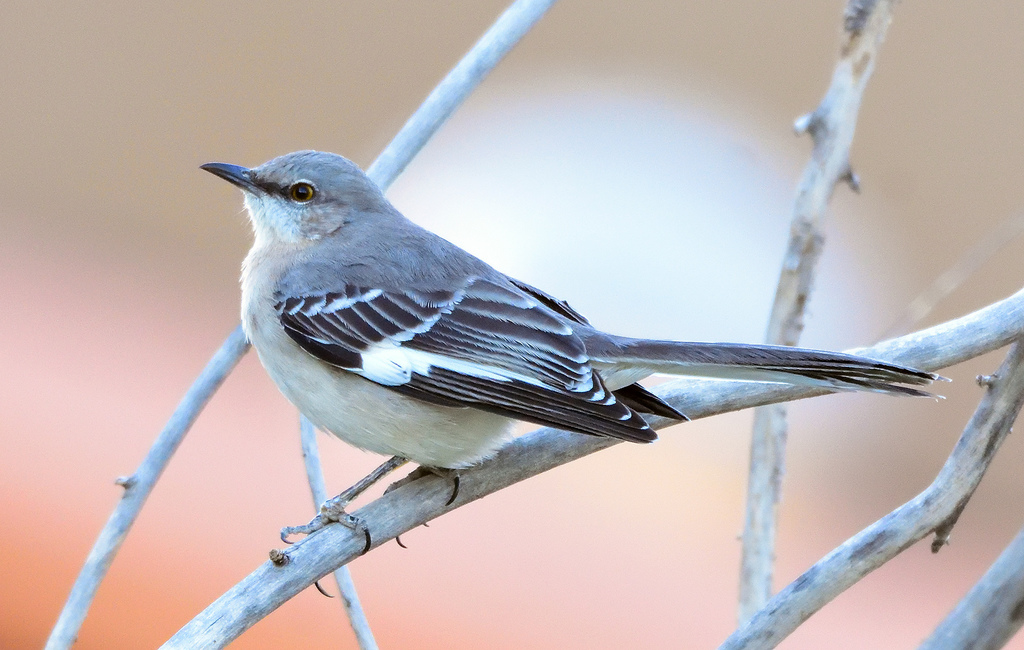
Northern Mockingbird
Mimus polyglottos
Habitat
Ground
Diet
Omnivore
Active Time
Diurnal
Size
49 g
About This Species
Found in open scrub, gardens, and hedgerows across much of North America, it is best known for its extended, varied song that mimics other birds, insects, and even mechanical sounds, often sung persistently from an exposed perch. It can be seen year-round defending territory, sometimes aggressively chasing off much larger birds, cats, or people that approach its nest or feeding area. Look for the flash of white wing patches as it flies low across open ground, a behaviour it also uses to startle insects into view.
Ethical Viewing Guidelines
- This species is often bold and will approach or scold observers itself, but keeping a modest distance is still the better practice, especially near a nest, since repeated disturbance can affect its ability to feed young.
- Wild birds and nests are protected under the Migratory Bird Treaty Act in the US and equivalent law further south in its range, so nests should not be handled or closely approached.
- If a mockingbird is aggressively defending a site, moving away calmly rather than lingering is the least disruptive response.
Seasonal Activity
11,391,761 sightings · 2000–2026
Citizen science records via GBIF
Classification
- Kingdom
- Animalia
- Phylum
- Chordata
- Class
- Aves
- Order
- Passeriformes
- Family
- Mimidae
Traits
- Diet
- Omnivore
- Foraging
- Ground
- Activity
- Diurnal
- Body mass
- 49 g
Photo
(c) Ad Konings, some rights reserved (CC BY-NC), uploaded by Ad Konings
CC-BY-NC-4.0
Occurrence data from GBIF.