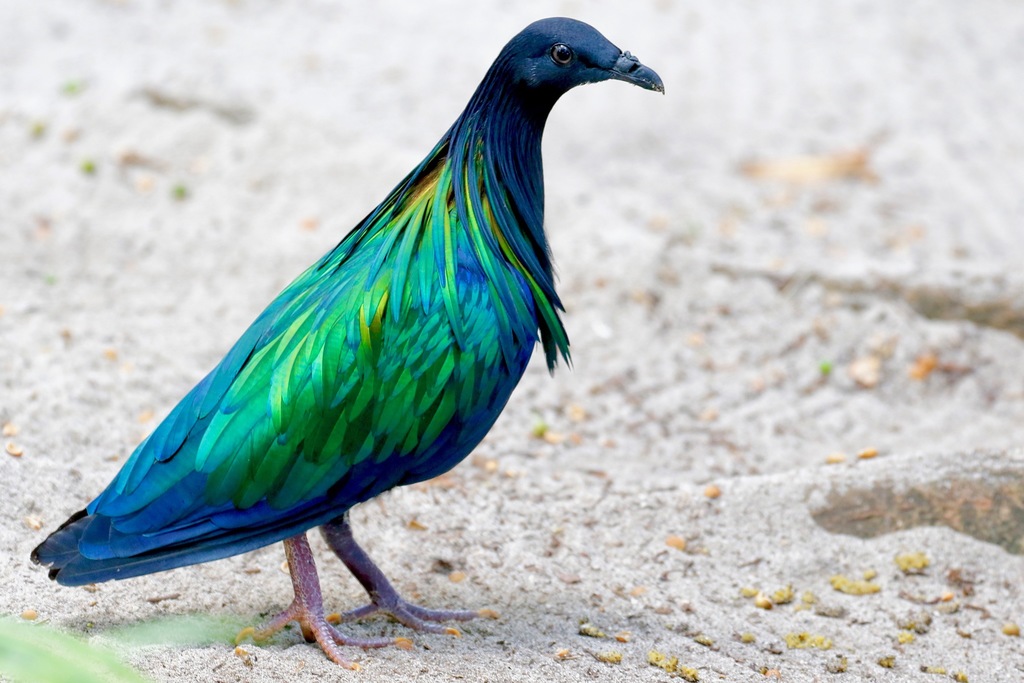
Nicobar Pigeon
Caloenas nicobarica
Also known as: Nicobar Dove
About This Species
Found on small, forested offshore islands across the Andaman and Nicobar archipelago and into the Pacific, this large, iridescent pigeon tends to move between islands in flocks, feeding on seeds, fruit, and hard nuts on the forest floor and in low scrub. Look for the striking metallic green and copper plumage catching the light as birds walk deliberately through leaf litter, and listen for the deep, low, grunting coos that carry through dense coastal forest. Early morning visits to small, undisturbed islands with intact forest cover offer the best chances, particularly around fruiting trees where flocks may congregate before dispersing across the canopy.
Ethical Viewing Guidelines
- Maintain a minimum distance of 20–30 metres and use binoculars or a telephoto lens to avoid flushing birds from feeding or roosting sites, as this species is particularly sensitive to disturbance on small island habitats where it has limited escape options.
- It receives protection across much of its range under national wildlife legislation, including Indonesia's Government Regulation No.
- 7/1999, India's Wildlife Protection Act (covering Andaman and Nicobar populations), and CITES Appendix I listing, which prohibits international commercial trade — always verify local permits before conducting close observation or research activities.
- Keep group sizes small, avoid visiting known nesting islands during the breeding season, and never use playback calls or bait, as repeated disturbance on isolated islands can cause site abandonment with serious population consequences.
Seasonal Activity
2,809 sightings · 2000–2026
Citizen science records via GBIF
Classification
- Kingdom
- Animalia
- Phylum
- Chordata
- Class
- Aves
- Order
- Columbiformes
- Family
- Columbidae
Photo
(c) Bird Explorers, some rights reserved (CC BY-NC), uploaded by Bird Explorers
CC-BY-NC-4.0
Occurrence data from GBIF.