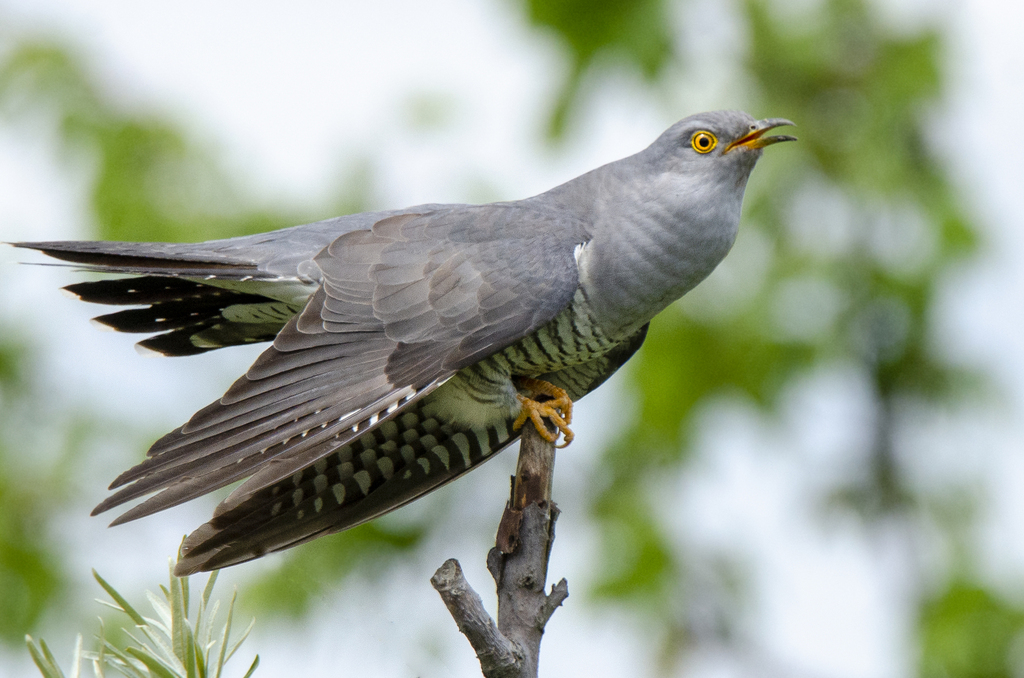
Common Cuckoo
Cuculus canorus
Also known as: Cuckoo, European Cuckoo, Cucut, Eurasian Cuckoo
Habitat
Mid-canopy
Diet
Invertebrate
Active Time
Diurnal
Size
111 g
About This Species
This medium-sized brood parasite is most often detected by its unmistakable two-note call, given by males from open woodland, farmland hedgerows, and heathland edges through the spring and early summer. It can be surprisingly hard to see well despite the loud, far-carrying call, since it perches quietly on wires or bare branches and its hawk-like grey plumage and barred underparts blend into dappled cover. Early mornings and evenings in spring, when calling activity peaks, offer the best chance of tracking one down by ear before spotting it visually.
Ethical Viewing Guidelines
- Watch from a distance once a calling bird is located, since approaching too closely will often cause it to fly off before you get a good look.
- Legal protection for wild birds is widespread across this species' Old World breeding range, but the specific rules and exceptions vary by country, so avoid assuming one jurisdiction's standard applies elsewhere.
- Because this species lays its eggs in the nests of host birds, avoid disturbing any nest you find being watched or visited by a cuckoo, since interference can affect both species involved.
Seasonal Activity
1,840,002 sightings · 2000–2026
Citizen science records via GBIF
Classification
- Kingdom
- Animalia
- Phylum
- Chordata
- Class
- Aves
- Order
- Cuculiformes
- Family
- Cuculidae
Traits
- Diet
- Invertebrate
- Foraging
- Mid-canopy
- Activity
- Diurnal
- Body mass
- 111 g
Photo
(c) Oleg, some rights reserved (CC BY-NC), uploaded by Oleg
CC-BY-NC-4.0
Occurrence data from GBIF.