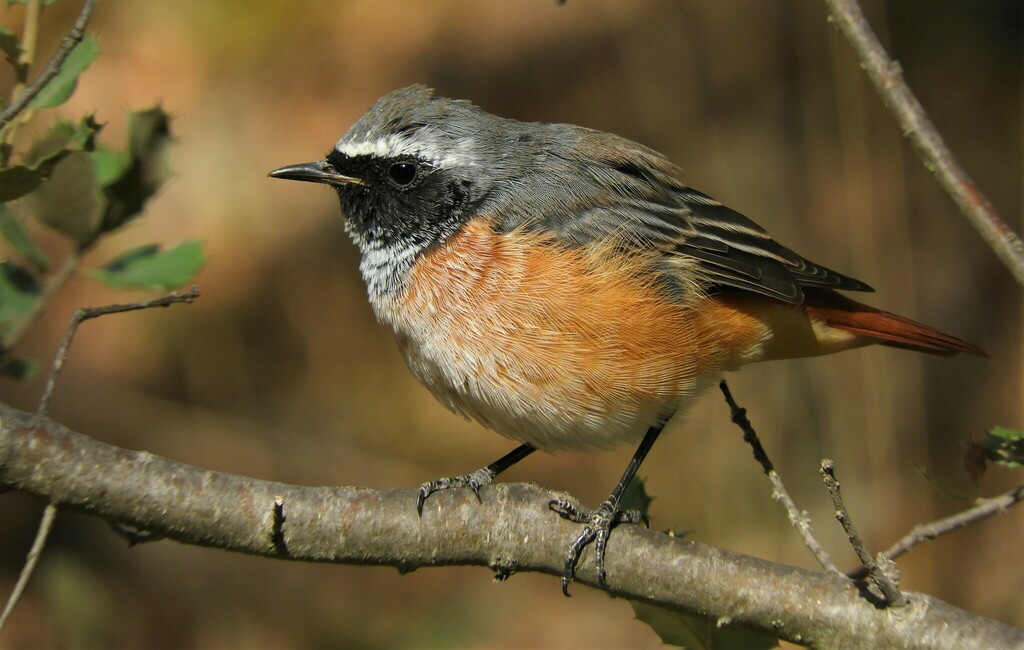
Common Redstart
Phoenicurus phoenicurus
Also known as: Redstart
Habitat
Understory
Diet
Invertebrate
Active Time
Diurnal
Size
15 g
About This Species
A restless understorey bird, it flicks its rust-orange tail almost constantly while perched on low branches and fence posts at woodland edges, old orchards and parkland with mature trees. The male's slate-grey back, black face and orange breast make it easy to pick out in good light, especially early in the morning when it sings from an open perch. It is a summer visitor across much of Europe and western Asia, arriving in spring and best looked for around nest holes in old trees, walls or nest boxes through early summer.
Ethical Viewing Guidelines
- Staying back 10-15 metres from an active nest hole is enough to avoid causing adults to abandon feeding visits, and watching from a fixed spot rather than following the bird along a hedgerow reduces stress considerably.
- Nests and eggs are protected under wildlife legislation across most of its European breeding range while in use, particularly during the spring and early summer season.
- Avoiding repeated visits to a known nest site, even at a distance, is the simplest way to let a pair raise a brood undisturbed.
Seasonal Activity
1,357,887 sightings · 2000–2026
Citizen science records via GBIF
Classification
- Kingdom
- Animalia
- Phylum
- Chordata
- Class
- Aves
- Order
- Passeriformes
- Family
- Muscicapidae
Traits
- Diet
- Invertebrate
- Foraging
- Understory
- Activity
- Diurnal
- Body mass
- 15 g
Photo
(c) Pablo Pozo, some rights reserved (CC BY-NC), uploaded by Pablo Pozo
CC-BY-NC-4.0
Occurrence data from GBIF.