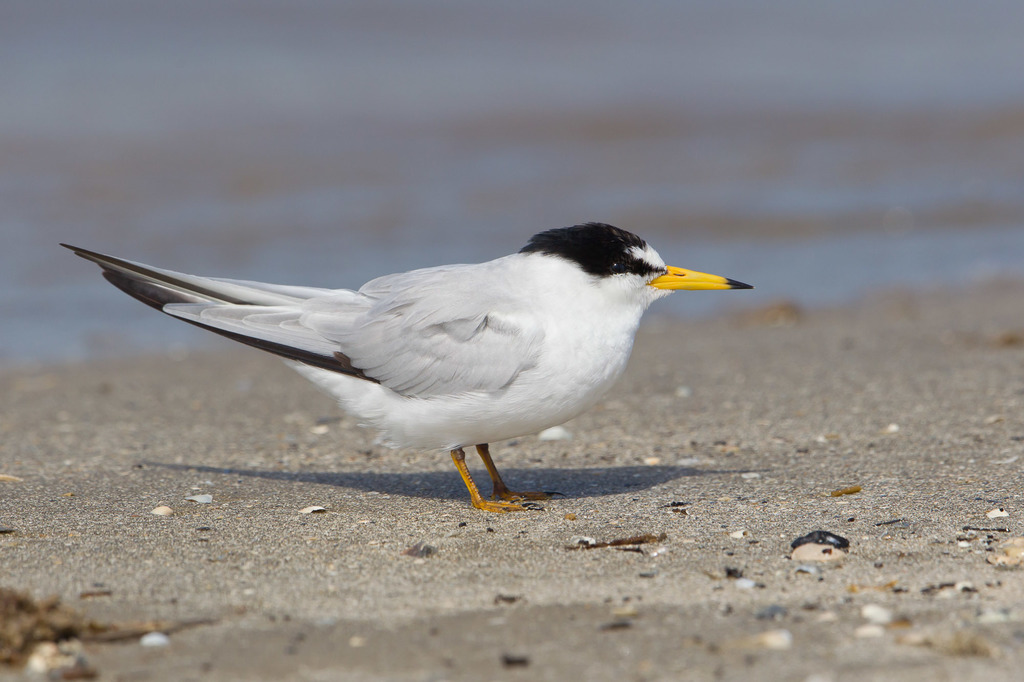
Least Tern
Sternula antillarum
Also known as: Antillean Tern, Spratt Gull
About This Species
The smallest tern in the Americas nests in loose colonies on open sand or gravel beaches, river bars and salt flats, where its pale grey-and-white plumage and yellow bill blend surprisingly well into the substrate. Watch for its distinctive hovering flight and steep plunge-dives for small fish just offshore, most active during warm daylight hours in the breeding season. Late spring through summer is the time to see nesting colonies, though this is also the period when disturbance does the most damage to eggs and chicks.
Ethical Viewing Guidelines
- Keep well back from any colony, ideally 50 metres or more, and never walk directly toward a group of adults giving alarm calls, since that signals eggs or chicks are nearby and at risk of exposure or predation once the parents are flushed.
- Least Tern colonies are legally protected nesting sites in many parts of its range, including specific beach-closure rules in parts of the United States, though exact protections and enforcement differ by state and country.
- Sticking to marked paths, keeping dogs leashed, and avoiding colony areas entirely during peak nesting months is the safest approach.
Seasonal Activity
641,495 sightings · 2000–2026
Citizen science records via GBIF
Classification
- Kingdom
- Animalia
- Phylum
- Chordata
- Class
- Aves
- Order
- Charadriiformes
- Family
- Laridae
Photo
(c) Greg Lasley, some rights reserved (CC BY-NC), uploaded by Greg Lasley
CC-BY-NC-4.0
Occurrence data from GBIF.