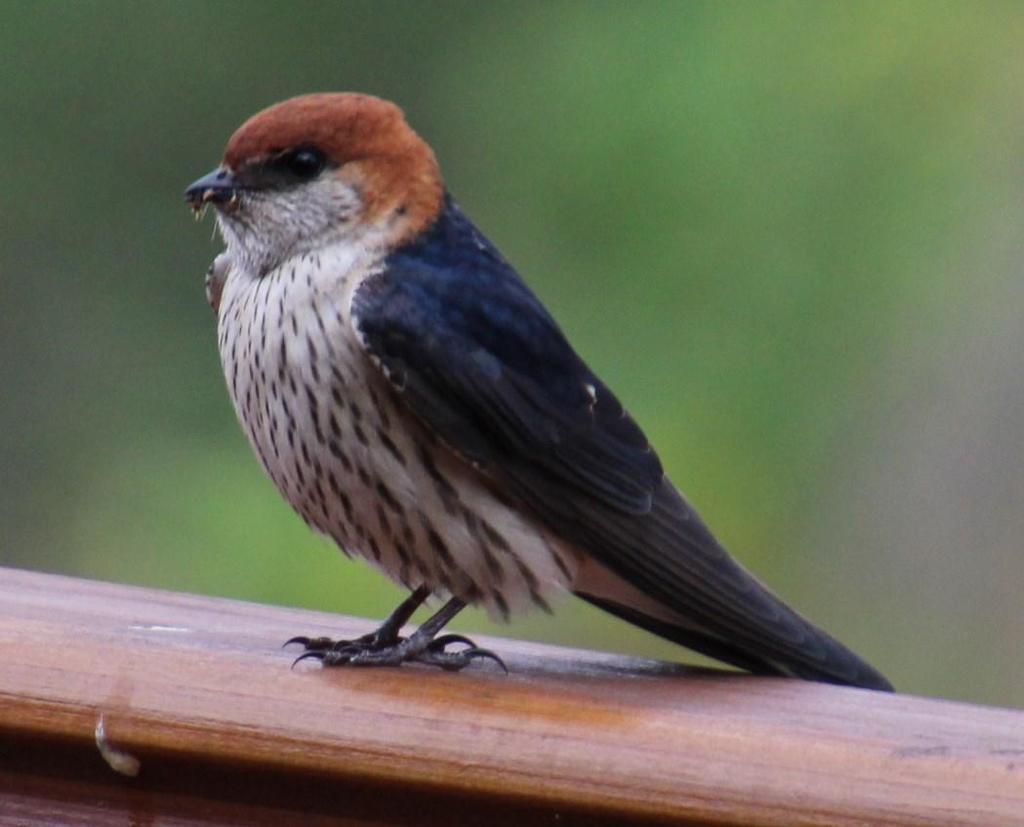
Greater Striped-Swallow
Cecropis cucullata
About This Species
A swallow of southern Africa readily identified by its rufous cap, pale underparts streaked with fine dark lines, and deeply forked tail with elongated outer feathers. It is strongly associated with human structures, building distinctive bottle-shaped mud nests under bridges, culverts and building eaves, and can be watched hawking insects in open, low flight nearby. Spring and summer, when birds are actively nest-building and feeding young, offer the most reliable viewing around known nest colonies.
Ethical Viewing Guidelines
- Avoid lingering directly beneath active nests, since repeated disturbance near the nest entrance can cause adults to abandon eggs or chicks.
- Wild bird protections apply across the countries of southern Africa where it occurs, but the specific legal detail varies by country, so treat nest sites with the same caution everywhere rather than assuming a uniform rule.
- Watching adults arrive and depart from a distance is the most reliable way to enjoy the colony without disrupting it.
LCAvesPasseriformesHirundinidae
Seasonal Activity
194,442 sightings · 2000–2026
Citizen science records via GBIF
All monthsThis month
Classification
- Kingdom
- Animalia
- Phylum
- Chordata
- Class
- Aves
- Order
- Passeriformes
- Family
- Hirundinidae
Photo
(c) Tony Rebelo, some rights reserved (CC BY-SA), uploaded by Tony Rebelo
CC-BY-SA-4.0
Occurrence data from GBIF.