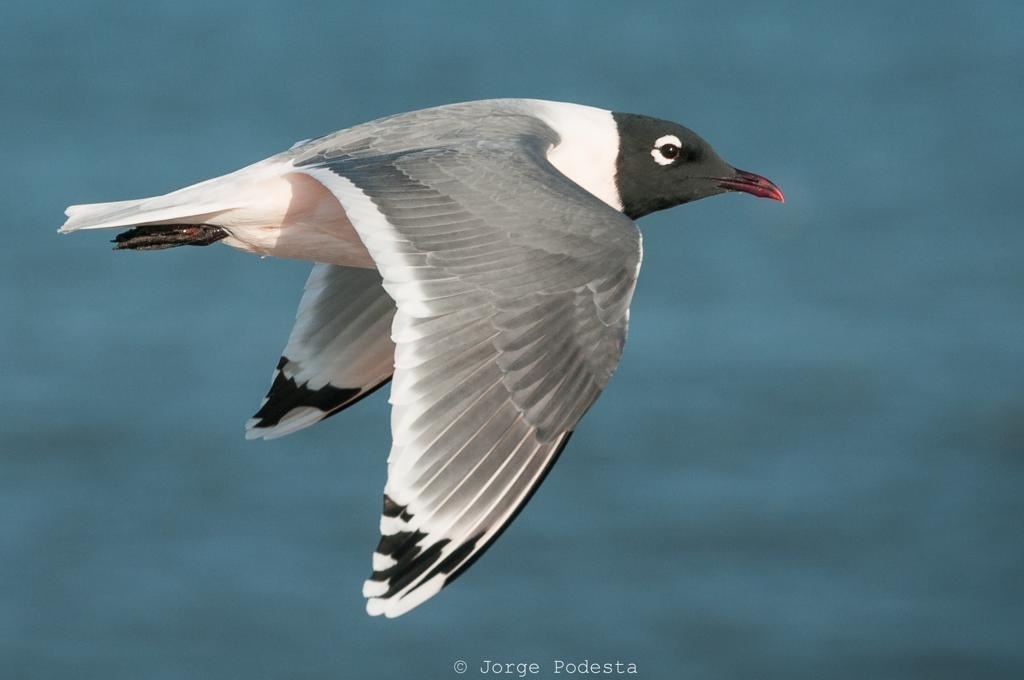
Franklin's Gull
Leucophaeus pipixcan
About This Species
Breeds in large colonies in prairie marshes and wetlands of north-central North America, nesting on floating vegetation among reeds, then undertakes one of the longest migrations of any gull to winter along the Pacific coast of South America. Look for its neat black hood, white eye crescents and buoyant, tern-like flight, often seen following farm machinery to catch disturbed insects. Spring and autumn migration brings large, vocal flocks through the interior, while breeding colonies are most active in early summer.
Ethical Viewing Guidelines
- Keep well back from breeding colonies in marsh vegetation, since nests are often hidden among reeds and easily damaged or exposed by wading or boating too close, and adults can abandon nests if repeatedly flushed.
- Migratory and breeding waterbirds are protected under federal law in both the United States and Canada, though enforcement and specific colony access rules can differ between and within states and provinces, so follow posted refuge or reserve guidance.
- Non-breeding flocks in open fields or on migration can be watched from a normal distance without special caution.
NEAvesCharadriiformesLaridae
Seasonal Activity
599,345 sightings · 2000–2026
Citizen science records via GBIF
All monthsThis month
Classification
- Kingdom
- Animalia
- Phylum
- Chordata
- Class
- Aves
- Order
- Charadriiformes
- Family
- Laridae
Photo
(c) georg32sea, some rights reserved (CC BY-NC)
CC-BY-NC-4.0
Occurrence data from GBIF.