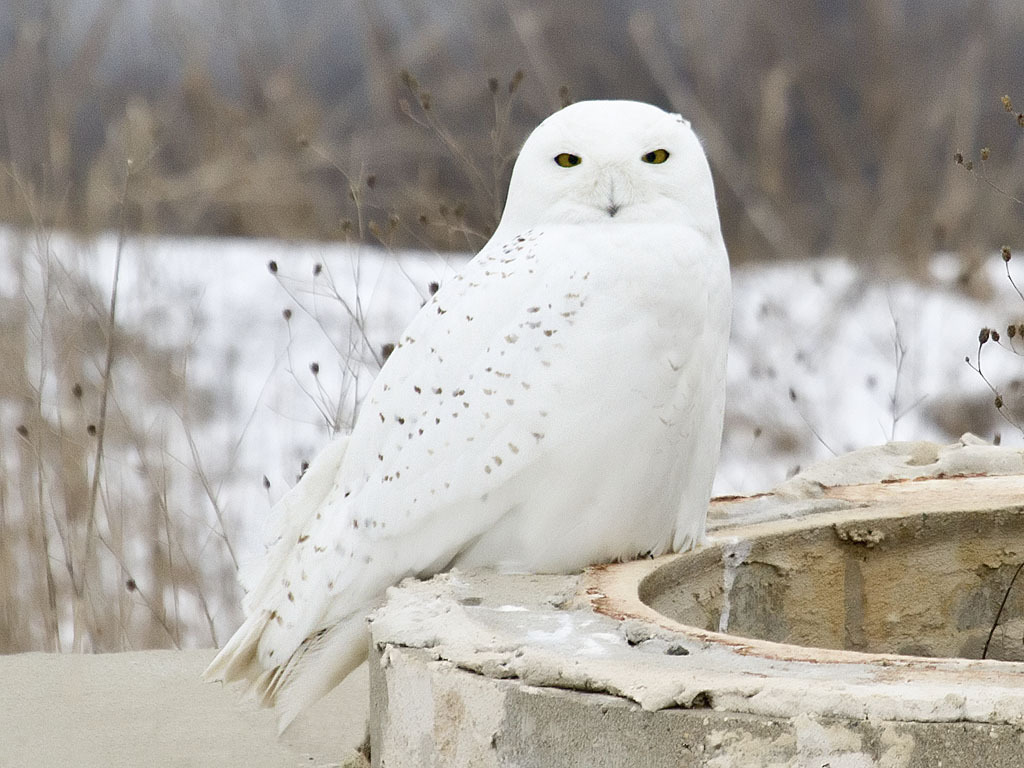
Snowy Owl
Bubo scandiacus
About This Species
This large, diurnal owl favors open, treeless landscapes — arctic tundra on its breeding grounds and windswept fields, coastal marshes, dune systems, and airport grasslands during winter irruptions further south. Scan low perches such as fence posts, hay bales, rooftops, and ground rises, as individuals often sit motionless for long periods surveying their surroundings; listen for a deep, booming territorial hoot or a harsh, barking alarm call if you venture too close. Winter irruption years — driven by prey scarcity in the north — offer the best viewing opportunities from November through March, with overcast days reducing glare on the white plumage and making distant birds easier to spot against dark soil or stubble fields.
Ethical Viewing Guidelines
- Maintain a minimum distance of 150 metres at all times, using a spotting scope or telephoto lens rather than approaching closer for a better view, as this species is particularly sensitive to disturbance during irruption winters when individuals may already be physiologically stressed.
- It is protected under the Migratory Bird Treaty Act in the USA and Canada, the EU Birds Directive across European range states, and equivalent national legislation throughout its circumpolar range, meaning intentional flushing or harassment can carry serious legal penalties.
- Leave immediately if the bird shows alert posture, head-turning, or repeated flushing, prioritise observation from a vehicle where possible as it functions as an effective hide, and never share precise roost or hunting site locations on public platforms.
Seasonal Activity
269,803 sightings · 2000–2026
Citizen science records via GBIF
Classification
- Kingdom
- Animalia
- Phylum
- Chordata
- Class
- Aves
- Order
- Strigiformes
- Family
- Strigidae
Photo
(c) Bill Bouton, some rights reserved (CC BY-SA)
CC-BY-SA-4.0
Occurrence data from GBIF.