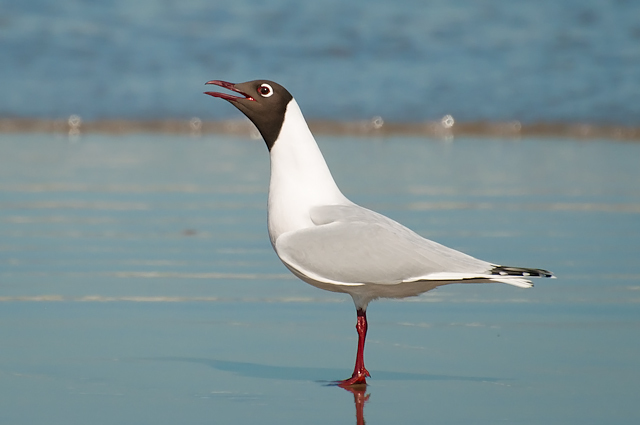
Brown-Hooded Gull
Chroicocephalus maculipennis
About This Species
Look for this small gull with a distinctive dark hood and reddish bill along coastlines, estuaries, rivers and inland wetlands across southern South America, where it forages by wading in shallows or picking insects from freshly ploughed fields. It is often seen in loose flocks, its harsh, chattering calls carrying over open water or farmland. Coastal mudflats and wetland margins during the austral breeding season, roughly spring and summer in the region, are especially productive.
Ethical Viewing Guidelines
- Keep a respectful distance of at least 20 to 30 metres from roosting or nesting flocks, since colonial gulls readily abandon nests or chicks when disturbed.
- Wildlife protections vary across the countries within its range, so confirm local rules before approaching any colony.
- Avoid walking through nesting colonies on beaches or wetland islands, and keep dogs leashed in areas where birds are gathered.
NEAvesCharadriiformesLaridae
Seasonal Activity
182,913 sightings · 2000–2026
Citizen science records via GBIF
All monthsThis month
Classification
- Kingdom
- Animalia
- Phylum
- Chordata
- Class
- Aves
- Order
- Charadriiformes
- Family
- Laridae
Photo
(c) Cláudio Dias Timm, some rights reserved (CC BY-NC-SA)
CC-BY-NC-SA-4.0
Occurrence data from GBIF.