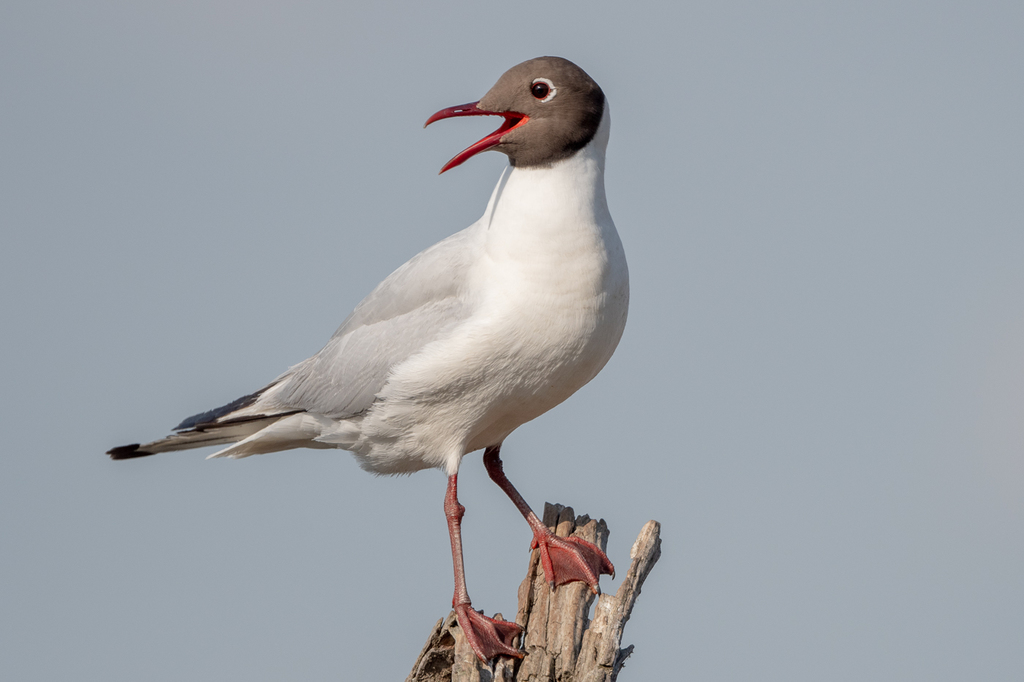
Black-Headed Gull
Chroicocephalus ridibundus
Also known as: Common Black-Headed Gull
About This Species
A small gull with a dark chocolate-brown hood in summer, fading to a pale head with a dark ear spot in winter, and red bill and legs year-round. It is highly adaptable, feeding on invertebrates, fish and scraps at coasts, reservoirs, farmland and urban parks, often in large noisy flocks. Breeding colonies on marshes and islands are active in spring and summer, while winter brings large numbers inland, including to city centres.
Ethical Viewing Guidelines
- Keep well back from breeding colonies, since these gulls nest at high density on the ground or low vegetation and are easily flushed, exposing eggs and chicks to predation and weather.
- Wild bird protections in the UK and across the EU restrict intentional disturbance of nesting birds, though specific seasonal dates and enforcement differ between countries.
- Outside the breeding season, ordinary caution around large winter roosts and feeding flocks is sufficient to avoid unnecessary disturbance.
NEAvesCharadriiformesLaridae
Seasonal Activity
5,742,454 sightings · 2000–2026
Citizen science records via GBIF
All monthsThis month
Classification
- Kingdom
- Animalia
- Phylum
- Chordata
- Class
- Aves
- Order
- Charadriiformes
- Family
- Laridae
Photo
(c) Dmitry Dubikovskiy, some rights reserved (CC BY-NC), uploaded by Dmitry Dubikovskiy
CC-BY-NC-4.0
Occurrence data from GBIF.