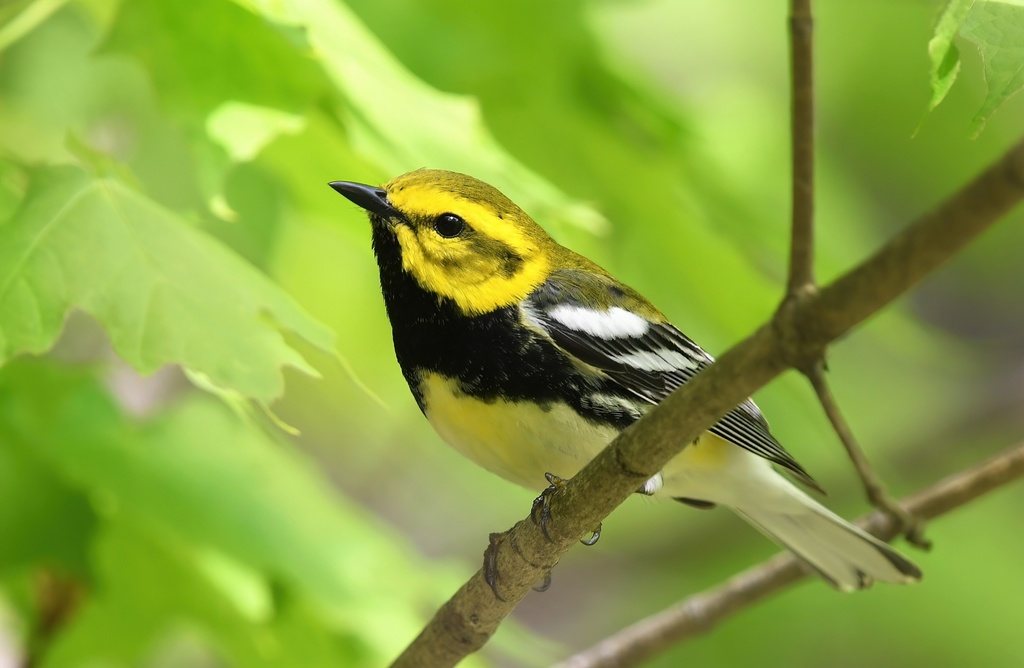
Black-Throated Green Warbler
Setophaga virens
About This Species
Search the mid to upper canopy of coniferous and mixed forest for a small warbler with a black throat and bright yellow face, often detected first by its buzzy, rising song. It forages actively along branches gleaning insects, which can make it hard to keep in view for long. Spring migration and the early breeding season are the most reliable windows, when singing males are easiest to locate.
Ethical Viewing Guidelines
- Stay on trails and view from a distance with binoculars rather than approaching trees where a bird is actively foraging or singing, since canopy species are easily lost to sight if pressed.
- Wild birds are protected under migratory bird laws across much of North America, and nest disturbance in particular can carry legal consequences, though enforcement and specifics vary by jurisdiction.
- If you locate a nest, resist the urge to linger nearby or return repeatedly.
LCAvesPasseriformesParulidae
Seasonal Activity
1,993,679 sightings · 2000–2026
Citizen science records via GBIF
All monthsThis month
Classification
- Kingdom
- Animalia
- Phylum
- Chordata
- Class
- Aves
- Order
- Passeriformes
- Family
- Parulidae
Photo
(c) edporopat, some rights reserved (CC BY-NC), uploaded by edporopat
CC-BY-NC-4.0
Occurrence data from GBIF.