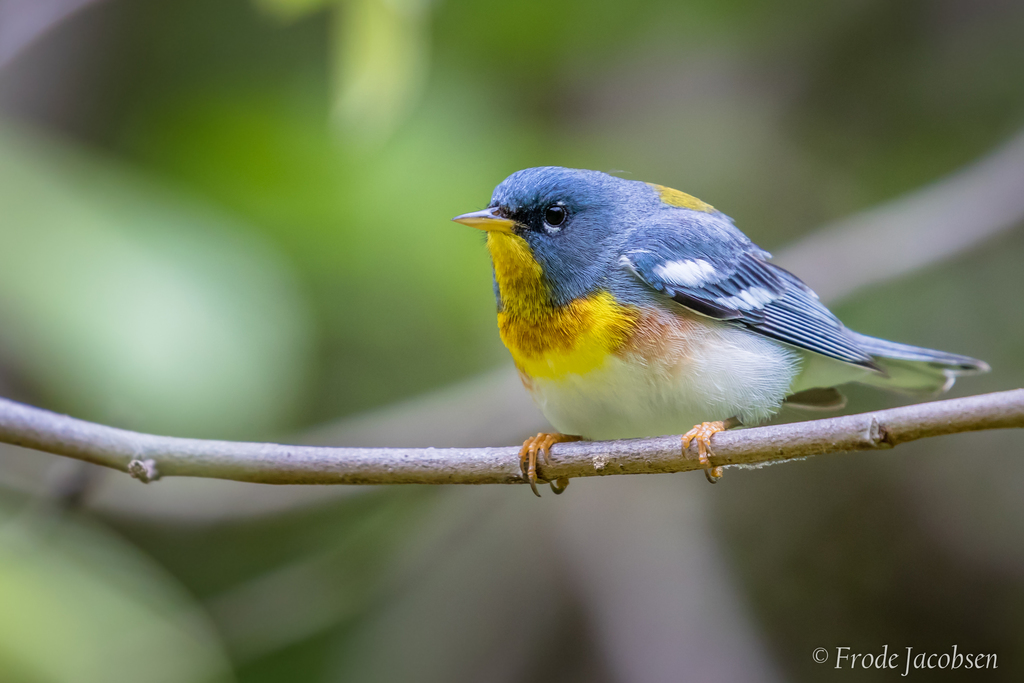
Northern Parula
Setophaga americana
Also known as: Parula Warbler, American Parula, Northern Parula Warbler
About This Species
This small warbler favors mossy, lichen-draped trees in mixed and coniferous forests, especially near water, and is most often located by its distinctive rising, buzzy trill that ends in a sharp downward note. Spring migration brings it through much of eastern North America from March to May, when males sing persistently from mid-to-upper canopy, making early morning the best time to listen before scanning with binoculars. Breeding birds favor Spanish moss in the south and old man's beard lichen further north, both used for nest material.
Ethical Viewing Guidelines
- Viewing from a distance with binoculars is standard practice for small canopy-dwelling songbirds, since they are easily missed if approached and offer little tolerance for close observation before moving off.
- In the United States and Canada it is protected under migratory bird treaty legislation, which prohibits disturbing active nests; playback of recorded song to draw the bird in should be used sparingly, if at all, especially during the breeding season.
- Staying on trails and avoiding prolonged tape use near a singing male reduces stress without much cost to the view.
Seasonal Activity
2,918,709 sightings · 2000–2026
Citizen science records via GBIF
Classification
- Kingdom
- Animalia
- Phylum
- Chordata
- Class
- Aves
- Order
- Passeriformes
- Family
- Parulidae
Photo
(c) Frode Jacobsen, some rights reserved (CC BY-NC), uploaded by Frode Jacobsen
CC-BY-NC-4.0
Occurrence data from GBIF.