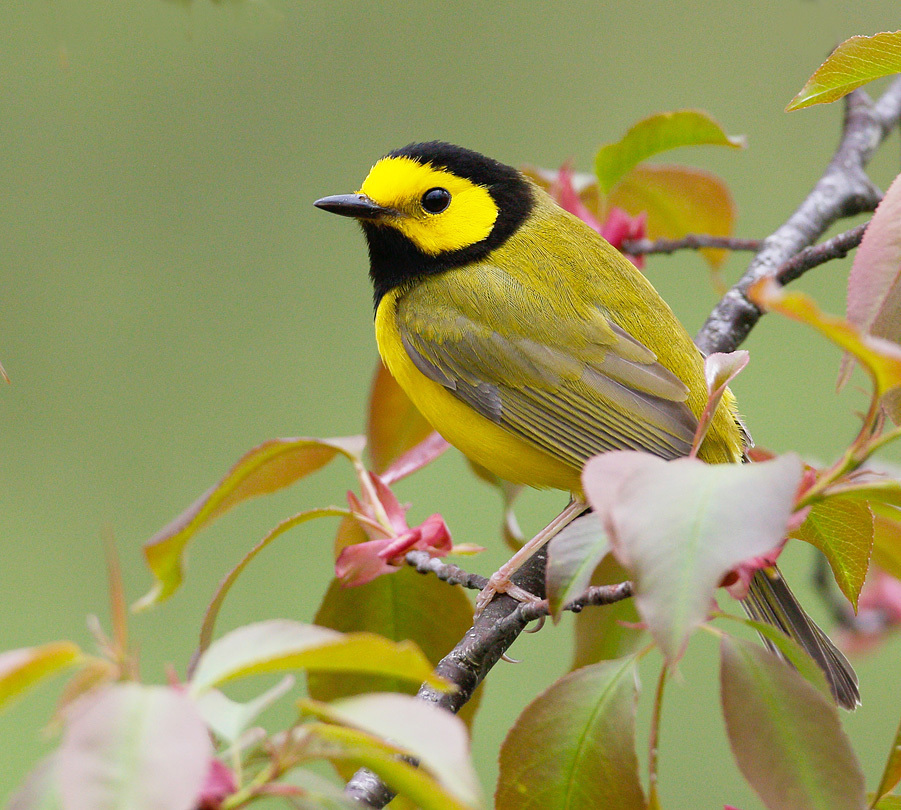
Hooded Warbler
Setophaga citrina
Also known as: Selby's Flycatcher
About This Species
Inhabits the understorey of mature deciduous forest with dense shrub cover, where it gleans insects from leaves close to the ground and males sing a loud, distinctive song from low perches. Males show a bold black hood contrasting with a bright yellow face, making them one of the more striking warblers to find in the forest interior. It is a summer migrant, arriving in spring, and is most reliably located by song in forest understorey from late spring through early summer.
Ethical Viewing Guidelines
- Observe from 10 to 15 metres and avoid playback of recorded song near likely nest sites, since repeated tape luring can pull birds away from feeding and nesting duties during a short breeding window.
- Native migratory birds are protected from take and nest disturbance under federal law in the United States and Canada, with additional state-level rules that can vary.
- Stay on trails through understorey habitat, since off-trail trampling degrades the dense shrub layer this species depends on for nesting.
LCAvesPasseriformesParulidae
Seasonal Activity
865,673 sightings · 2000–2026
Citizen science records via GBIF
All monthsThis month
Classification
- Kingdom
- Animalia
- Phylum
- Chordata
- Class
- Aves
- Order
- Passeriformes
- Family
- Parulidae
Photo
(c) jtajax, some rights reserved (CC BY-NC)
CC-BY-NC-4.0
Occurrence data from GBIF.