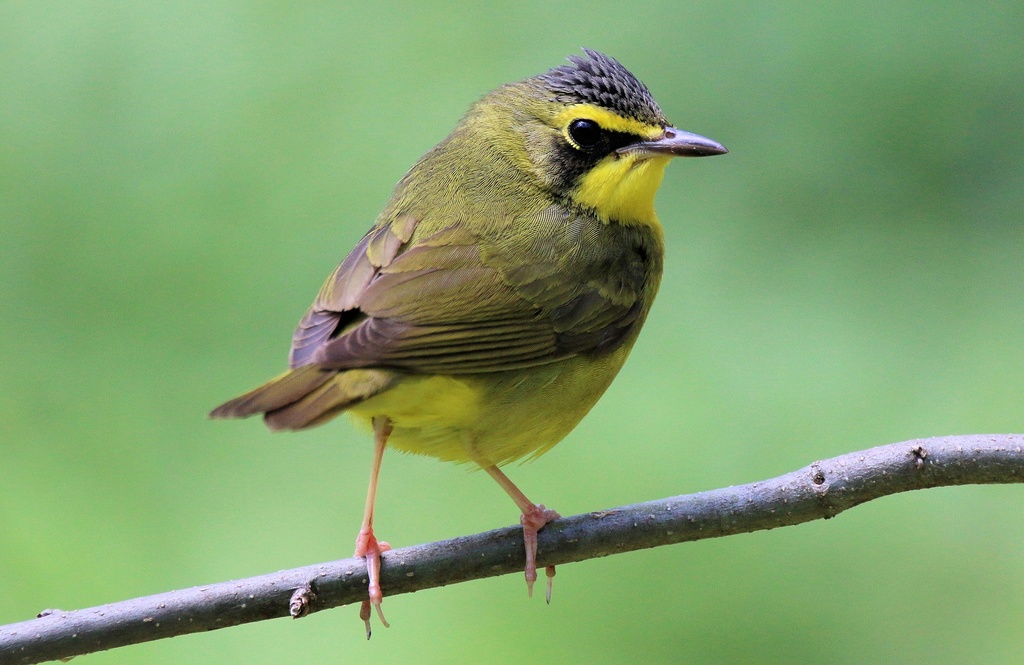
Kentucky Warbler
Geothlypis formosa
Also known as: Kentucky Yellowthroat
About This Species
Kentucky Warblers stay low in the dense understory of moist deciduous forest, foraging on and near the ground rather than high in the canopy. Its loud, rolling song is far more often heard than the bird is seen, so patient listening near shaded ravines and streamside thickets is the best strategy. Spring migration and the breeding season, roughly May through July across the eastern United States, offer the most vocal and active birds.
Ethical Viewing Guidelines
- Stay on trails and resist the temptation to push into dense cover to get closer to a singing male, since this species nests low and is easily flushed off eggs.
- It is protected under the US Migratory Bird Treaty Act, which prohibits disturbing nests or capturing birds without a permit.
- Limit the use of playback calls, as overuse can pull birds away from feeding or nesting duties.
LCAvesPasseriformesParulidae
Seasonal Activity
296,458 sightings · 2000–2026
Citizen science records via GBIF
All monthsThis month
Classification
- Kingdom
- Animalia
- Phylum
- Chordata
- Class
- Aves
- Order
- Passeriformes
- Family
- Parulidae
Photo
(c) vogelbild, some rights reserved (CC BY-NC)
CC-BY-NC-4.0
Occurrence data from GBIF.