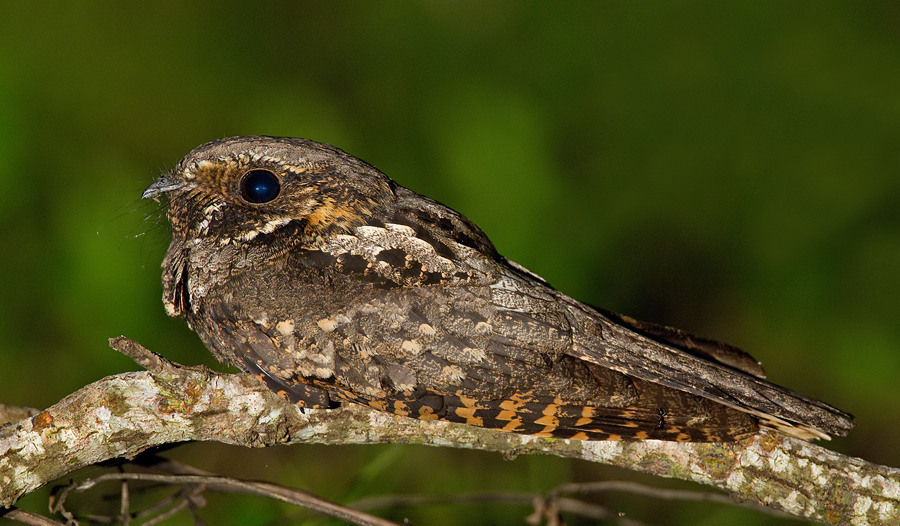
Eastern Whip-Poor-Will
Antrostomus vociferus
Also known as: Eastern Whip-Poor-Wil, Eastern Whippoorwill, Nocturnal Goatsucker, Whip-Poor-Wil, Whip-Poor-Will
About This Species
A nocturnal nightjar of open, dry woodland and forest edge in eastern North America, virtually invisible by day thanks to bark-like plumage and its habit of roosting motionless on the ground or a low branch. It is best located after dark by its far-carrying, repeated call, given from a low perch near open clearings, forest roads or burned or logged patches with sparse understorey. Listen at dusk through the breeding season, particularly around a full moon when calling activity peaks.
Ethical Viewing Guidelines
- This species is listed as Near Threatened, reflecting range-wide declines linked to habitat loss and reduced flying-insect prey, so caution matters more here than for a common bird.
- Locate it by ear and stay well back rather than using a spotlight or approaching a calling bird on the ground, since it nests in a bare scrape with no cover and can be flushed off eggs or chicks by close approach or bright light.
- Avoid repeated playback, which can draw a bird away from foraging or nesting for an extended period; in the US it is protected under the Migratory Bird Treaty Act, and disturbing an active nest is an offence.
Seasonal Activity
155,856 sightings · 2000–2026
Citizen science records via GBIF
Classification
- Kingdom
- Animalia
- Phylum
- Chordata
- Class
- Aves
- Order
- Caprimulgiformes
- Family
- Caprimulgidae
Photo
(c) Paul Cools, some rights reserved (CC BY-NC), uploaded by Paul Cools
CC-BY-NC-4.0
Occurrence data from GBIF.