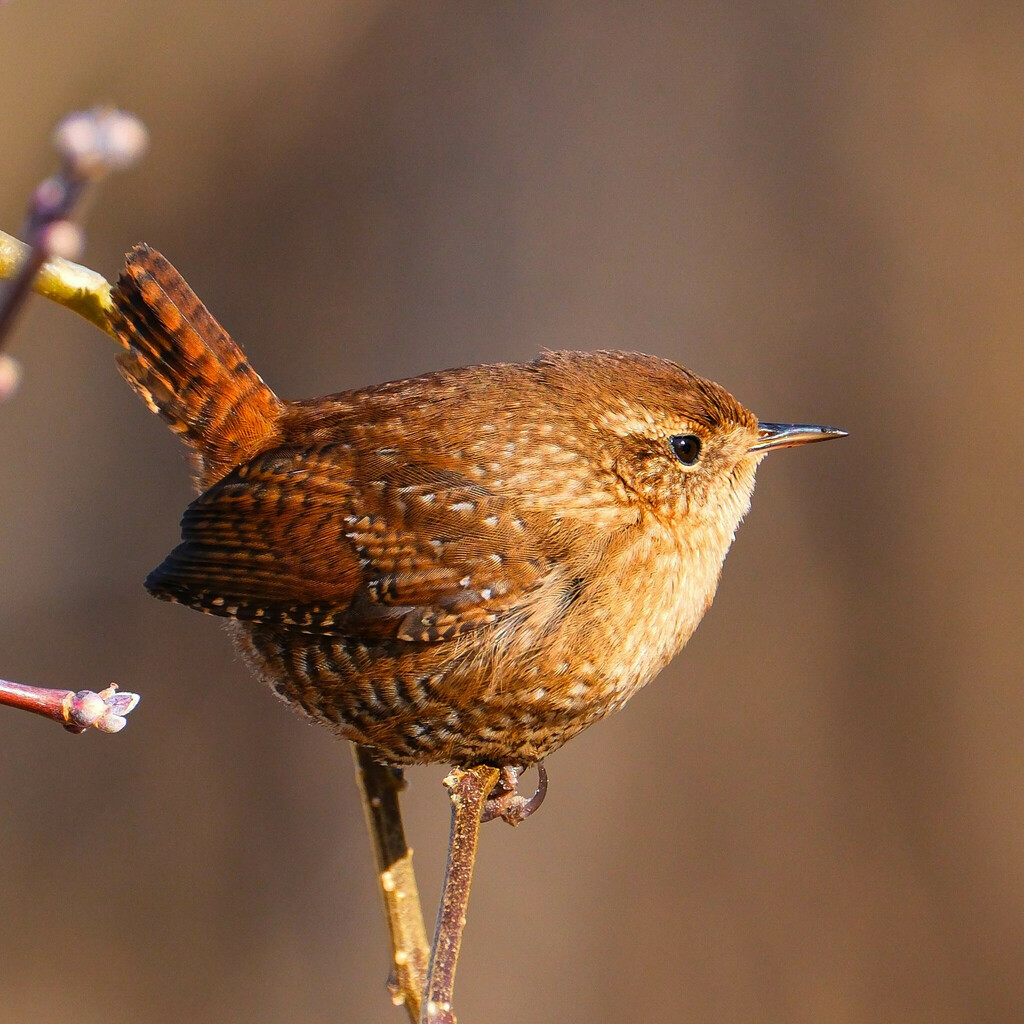
Winter Wren
Troglodytes hiemalis
Also known as: Eastern Winter Wren
About This Species
Listen first for this tiny wren's remarkably loud, rapid, bubbling song, which carries far out of proportion to its size from dense understory in coniferous and mixed forest. It forages low down, creeping mouse-like through tangled roots, brush piles, and streamside vegetation, cocked tail a helpful field mark when it does show itself. Spring and early summer, when males are singing on territory, offer the best chance of a clear view.
Ethical Viewing Guidelines
- A few metres' distance is generally enough to avoid disturbing a foraging or singing bird, and moving slowly and pausing rather than pushing through dense cover will keep it calmer.
- General wildlife protection law in its North American range prohibits disturbing nests, so avoid lingering near any location where a bird is carrying food or nesting material.
- Leave brush piles and fallen logs undisturbed, since these are exactly the shelter this species depends on.
LCAvesPasseriformesTroglodytidae
Seasonal Activity
1,140,575 sightings · 2000–2026
Citizen science records via GBIF
All monthsThis month
Classification
- Kingdom
- Animalia
- Phylum
- Chordata
- Class
- Aves
- Order
- Passeriformes
- Family
- Troglodytidae
Photo
(c) andrewdressel, some rights reserved (CC BY-NC)
CC-BY-NC-4.0
Occurrence data from GBIF.