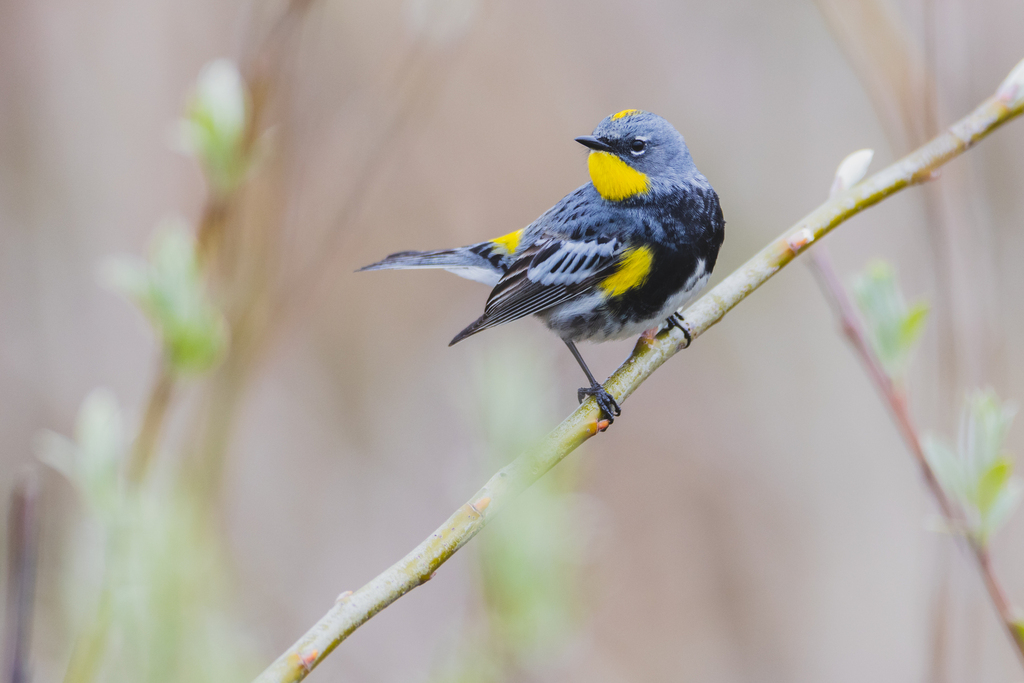
Yellow-Rumped Warbler
Setophaga coronata
Also known as: Myrtle Warbler
About This Species
One of the most adaptable warblers in North America, it forages actively through foliage for insects in summer and switches to eating waxy berries such as bayberry and wax myrtle in winter, allowing it to winter further north than most warblers. Look for its namesake bright yellow rump patch, most visible in flight or as it flicks its tail while perched. Migration in spring and fall brings large numbers through mixed woodland and edges, often in loose foraging flocks with other small songbirds.
Ethical Viewing Guidelines
- A modest distance of several metres is enough to watch this small, active warbler without disturbing its foraging.
- Wild birds are protected under the Migratory Bird Treaty Act in the US and Canada, so nests should not be approached or handled, particularly during the breeding season further north in its range.
- Slow, quiet movement and patience are more effective than close approach for good views, since it moves quickly through foliage.
LCAvesPasseriformesParulidae
Seasonal Activity
11,826,994 sightings · 2000–2026
Citizen science records via GBIF
All monthsThis month
Classification
- Kingdom
- Animalia
- Phylum
- Chordata
- Class
- Aves
- Order
- Passeriformes
- Family
- Parulidae
Photo
(c) Kris Cu, some rights reserved (CC BY-NC), uploaded by Kris Cu
CC-BY-NC-4.0
Occurrence data from GBIF.