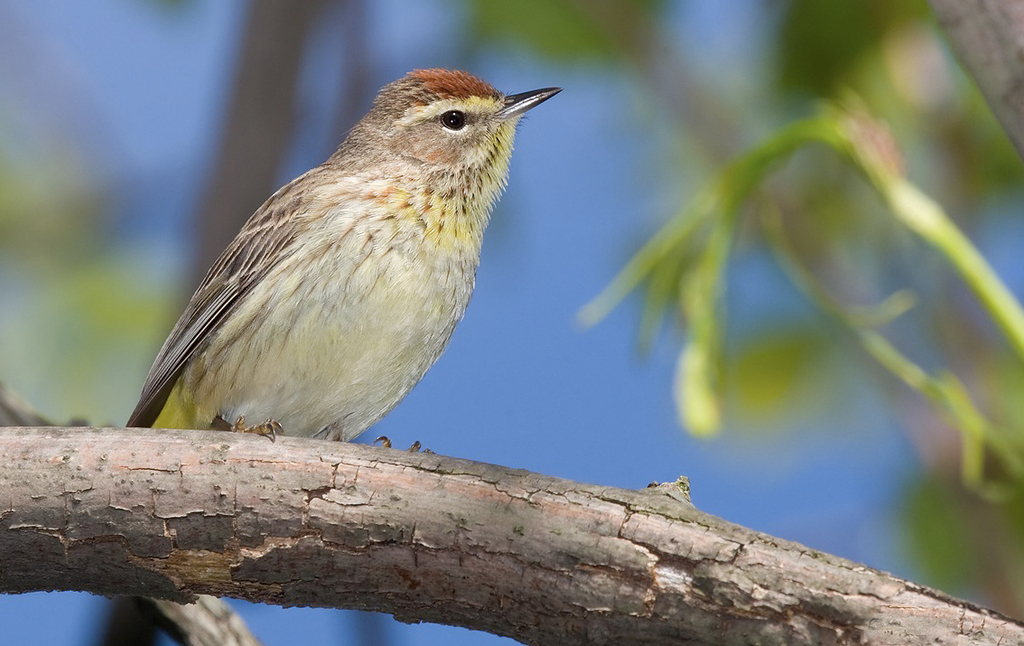
Palm Warbler
Setophaga palmarum
About This Species
This warbler favours open, brushy edges, weedy fields, and coastal scrub, where its habit of constantly pumping its tail helps separate it from other small songbirds. It forages low, often on or near the ground, picking insects from grass and low vegetation rather than gleaning high in the canopy. Migration periods in spring and fall bring the best numbers, when flocks move through open country and roadside edges in the eastern and southern US.
Ethical Viewing Guidelines
- Observe from a distance with binoculars rather than pushing into the low cover it uses for foraging and shelter.
- Migratory birds are protected under the Migratory Bird Treaty Act in the US and under similar statutes elsewhere on its range, which bar intentional disturbance or taking.
- Give extra space to birds that appear to be actively feeding to refuel during migration, since flushing them repeatedly costs energy they need for the journey.
LCAvesPasseriformesParulidae
Seasonal Activity
2,757,422 sightings · 2000–2026
Citizen science records via GBIF
All monthsThis month
Classification
- Kingdom
- Animalia
- Phylum
- Chordata
- Class
- Aves
- Order
- Passeriformes
- Family
- Parulidae
Photo
(c) William H. Majoros, some rights reserved (CC BY-SA)
CC-BY-SA-4.0
Occurrence data from GBIF.