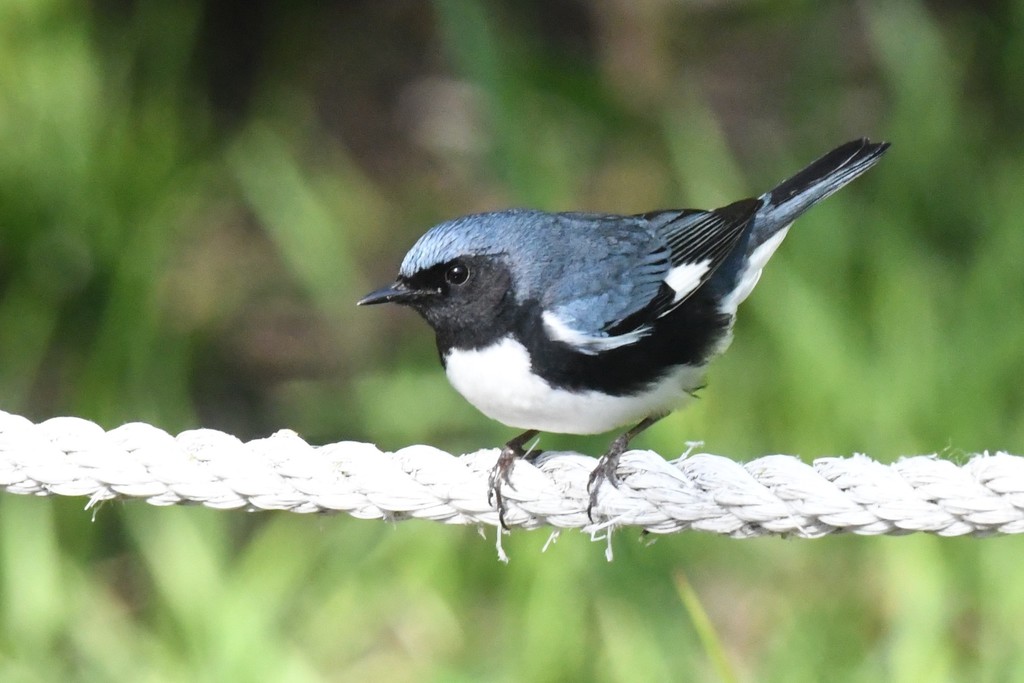
Black-Throated Blue Warbler
Setophaga caerulescens
About This Species
The male's slate-blue upperparts, black throat, and white underparts make this warbler distinctive as it forages low in the understory of mature deciduous and mixed forest, often staying still for long stretches between short sallies for insects. It breeds in northeastern North American forests with a dense shrub layer and is most easily found during spring migration and the breeding season, when males sing a slow, buzzy song from low perches. Listening for the song is usually more productive than scanning, since birds can sit motionless for minutes.
Ethical Viewing Guidelines
- A distance of several metres is sufficient to watch a foraging or singing bird without causing it to move off, and standing still tends to work better than approaching directly.
- Migratory birds are protected under wildlife law in both the United States and Canada across its breeding and passage range, and in Central America and the Caribbean during winter, though specific protections vary by country.
- Avoid playback of recorded song near territorial males during the breeding season, since repeated use can distract birds from feeding and nest defence.
Seasonal Activity
1,108,308 sightings · 2000–2026
Citizen science records via GBIF
Classification
- Kingdom
- Animalia
- Phylum
- Chordata
- Class
- Aves
- Order
- Passeriformes
- Family
- Parulidae
Photo
(c) Oliver Burrus, some rights reserved (CC BY-NC-SA), uploaded by Oliver Burrus
CC-BY-NC-SA-4.0
Occurrence data from GBIF.