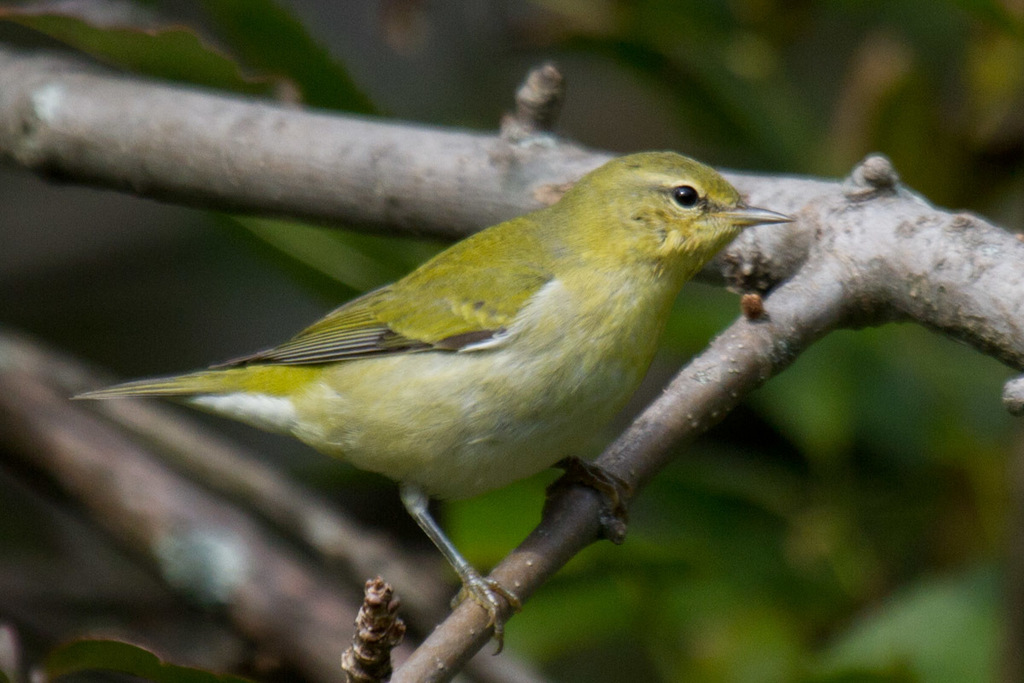
Tennessee Warbler
Leiothlypis peregrina
About This Species
Look for a small, plain olive-and-yellow warbler gleaning insects from foliage high in the canopy, most often during spring migration through the central and eastern United States. Its thin, staccato song, often described as three distinct parts, is frequently the first clue to its presence in mixed woodland or scrub. It breeds in boreal spruce forest across Canada, so spring and fall migration windows offer the best viewing away from that remote breeding range.
Ethical Viewing Guidelines
- As with most small migratory songbirds, keep a respectful distance of several metres and avoid pishing or playback repeatedly, which can disrupt feeding during an energy-critical migration stopover.
- It is protected under the Migratory Bird Treaty Act in the United States and Canada, with additional protections in Mexico, though specific provisions differ between countries.
- Avoid disturbing dense stopover habitat such as flowering or fruiting shrubs where migrants concentrate to refuel.
LCAvesPasseriformesParulidae
Seasonal Activity
1,512,060 sightings · 2000–2026
Citizen science records via GBIF
All monthsThis month
Classification
- Kingdom
- Animalia
- Phylum
- Chordata
- Class
- Aves
- Order
- Passeriformes
- Family
- Parulidae
Photo
(c) Mark Rosenstein, some rights reserved (CC BY-NC)
CC-BY-NC-4.0
Occurrence data from GBIF.