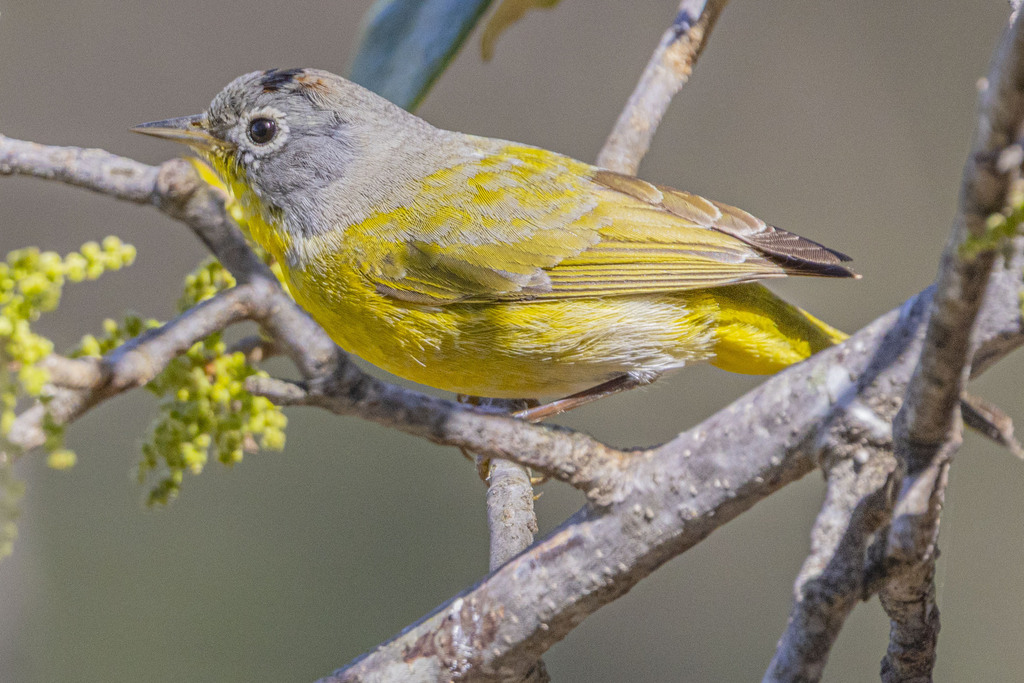
Nashville Warbler
Leiothlypis ruficapilla
About This Species
This small warbler favours brushy second growth, forest edges, and boggy thickets, where it gleans insects from low shrubs rather than the high canopy. Its song is a distinctive two-part phrase, a rising series of notes followed by a faster trill, which often gives it away before it's seen. Spring migration and the early breeding season are the best times, when males sing persistently from low, exposed perches.
Ethical Viewing Guidelines
- Stay back from any bird holding territory or carrying food, and use binoculars rather than moving in close, since flushing a foraging or nesting bird can cost it valuable energy or expose a nest to predators.
- Migratory songbirds are protected in the United States under the Migratory Bird Treaty Act and under similar laws through the rest of its range, so nests, eggs, and birds should not be disturbed or handled.
- Playback of recorded song to draw the bird in should be used sparingly, if at all, particularly during breeding season.
LCAvesPasseriformesParulidae
Seasonal Activity
1,707,628 sightings · 2000–2026
Citizen science records via GBIF
All monthsThis month
Classification
- Kingdom
- Animalia
- Phylum
- Chordata
- Class
- Aves
- Order
- Passeriformes
- Family
- Parulidae
Photo
(c) dnvarga, some rights reserved (CC BY-NC), uploaded by dnvarga
CC-BY-NC-4.0
Occurrence data from GBIF.