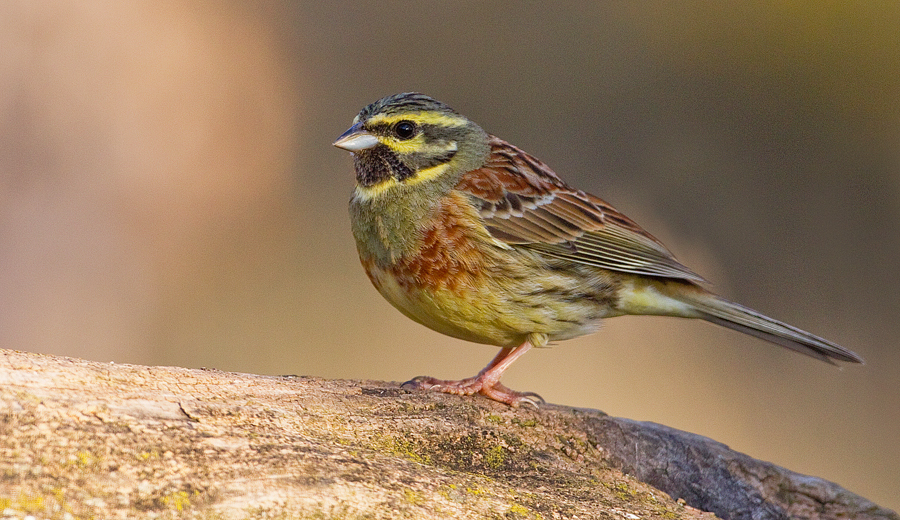
Cirl Bunting
Emberiza cirlus
Also known as: Gratapalles
Habitat
Ground
Diet
PlantSeed
Active Time
Diurnal
Size
26 g
About This Species
Look for a small bunting with a yellow face crossed by dark stripes and, in males, a black throat, typically seen low in hedgerows or feeding on the ground along field margins, stubble and scrubby farmland edges. It favours a mix of scattered scrub, rough grassland for insects and winter stubble for seeds, so traditionally managed farmland holds the best numbers. The song is a fast, dry rattle, often described as flatter and more monotonous than a yellowhammer's, and is most reliably heard from spring through summer.
Ethical Viewing Guidelines
- Keep to field margins and paths rather than pushing into hedgerows or scrub where it may be nesting, since ground and low-shrub nests are easily trampled or exposed to predators by disturbance.
- Farmland bird protections and access rules differ across the parts of southern England, continental Europe and the Mediterranean covered by its range, so treat any specific figure as applying to that country's law rather than universally.
- If the local rule is unclear, staying on established paths and giving hedgerows and scrub a wide berth during the breeding season is the cautious choice.
Seasonal Activity
486,044 sightings · 2000–2026
Citizen science records via GBIF
Classification
- Kingdom
- Animalia
- Phylum
- Chordata
- Class
- Aves
- Order
- Passeriformes
- Family
- Emberizidae
Traits
- Diet
- PlantSeed
- Foraging
- Ground
- Activity
- Diurnal
- Body mass
- 26 g
Photo
(c) Paul Cools, some rights reserved (CC BY-NC), uploaded by Paul Cools
CC-BY-NC-4.0
Occurrence data from GBIF.