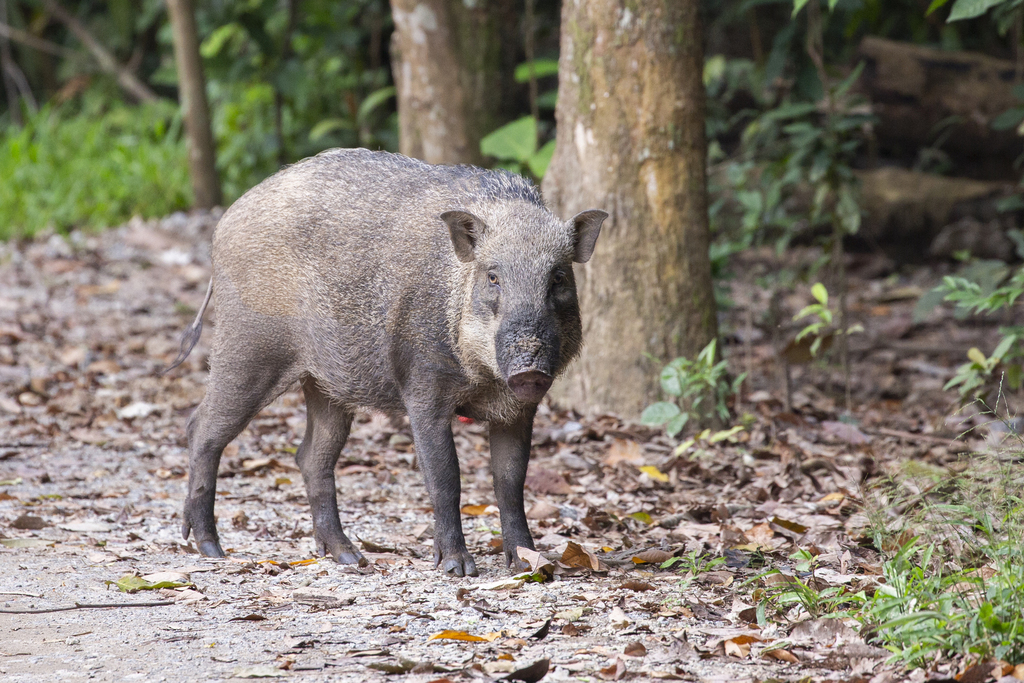
Wild Boar
Sus scrofa
Also known as: Eurasian Wild Pig, Indonesian Banded Pig, Ryukyu Islands Wild Pig, Vittatus, Wild Hog
Habitat
Ground
Diet
PlantSeed
Active Time
Nocturnal
Size
96.1 kg
About This Species
Look for rootled-up ground, wallows and well-worn trails through woodland and dense scrub, since this is a mainly nocturnal, ground-foraging animal most often encountered at dusk, dawn or after dark rather than in the middle of the day. Family groups of sows and piglets move together, while large males tend to be solitary, and both use snout and tusks to dig for roots, bulbs and invertebrates in soft soil. Autumn and winter, when mast crops like acorns draw animals to particular woodlands, are often the most productive times to find fresh sign or a sighting near dusk.
Ethical Viewing Guidelines
- Keep a substantial distance, at least several tens of metres, and never approach a sounder with young or a male in rut, since this is a large, powerful animal that can react aggressively if it feels cornered or separated from piglets.
- Legal protections and hunting status vary enormously across its native and introduced range, from strictly managed game species to unprotected pest status in some regions, so do not assume any single country's rules apply elsewhere.
- Retreating slowly and quietly if you encounter one at close range, rather than approaching for a better view, is the safest and least disruptive option.
Seasonal Activity
441,879 sightings · 2000–2026
Citizen science records via GBIF
Classification
- Kingdom
- Animalia
- Phylum
- Chordata
- Class
- Mammalia
- Order
- Artiodactyla
- Family
- Suidae
Traits
- Diet
- PlantSeed
- Foraging
- Ground
- Activity
- Nocturnal
- Body mass
- 96.1 kg
Photo
(c) budak, some rights reserved (CC BY-NC), uploaded by budak
CC-BY-NC-4.0
Occurrence data from GBIF.