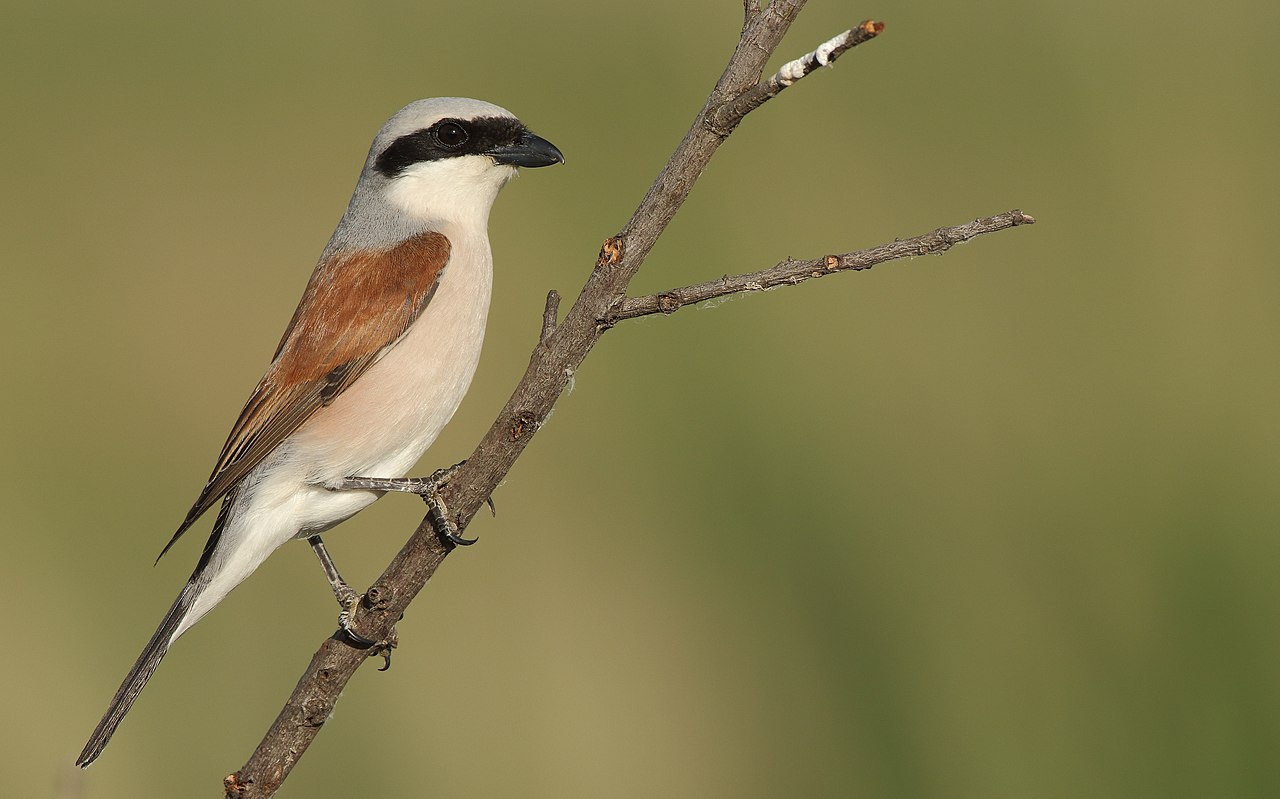
Red-Backed Shrike
Lanius collurio
Habitat
Ground
Diet
Invertebrate
Active Time
Diurnal
Size
28 g
About This Species
This small, hook-billed shrike hunts insects and small vertebrates from prominent perches along hedgerows, scrubby grassland, and heathland edges across Europe and western Asia, and is known for impaling prey on thorns as a larder. The male's grey head, chestnut back, and black mask make it distinctive, and it is best looked for perched on the tops of bushes and fence lines scanning for prey. It is a summer breeding visitor, so late spring through summer, in open scrubby habitat, offers the best chance of a sighting.
Ethical Viewing Guidelines
- Keep at least 20-30 metres back from a hunting or nesting bird, since shrikes are easily flushed from favoured perches and repeated disturbance can push a pair off territory.
- It holds protected status under wildlife law across much of its European breeding range, though the details and enforcement vary by country, so confirm local rules rather than assuming a single standard.
- Avoid searching thorny scrub for a larder or nest, since disturbing the dense cover it relies on can expose the site to predators.
LCAvesPasseriformesLaniidae
Seasonal Activity
1,053,351 sightings · 2000–2026
Citizen science records via GBIF
All monthsThis month
Classification
- Kingdom
- Animalia
- Phylum
- Chordata
- Class
- Aves
- Order
- Passeriformes
- Family
- Laniidae
Traits
- Diet
- Invertebrate
- Foraging
- Ground
- Activity
- Diurnal
- Body mass
- 28 g
Photo
Wikimedia Commons / Wikimedia Commons
CC-BY-SA-4.0
Occurrence data from GBIF.