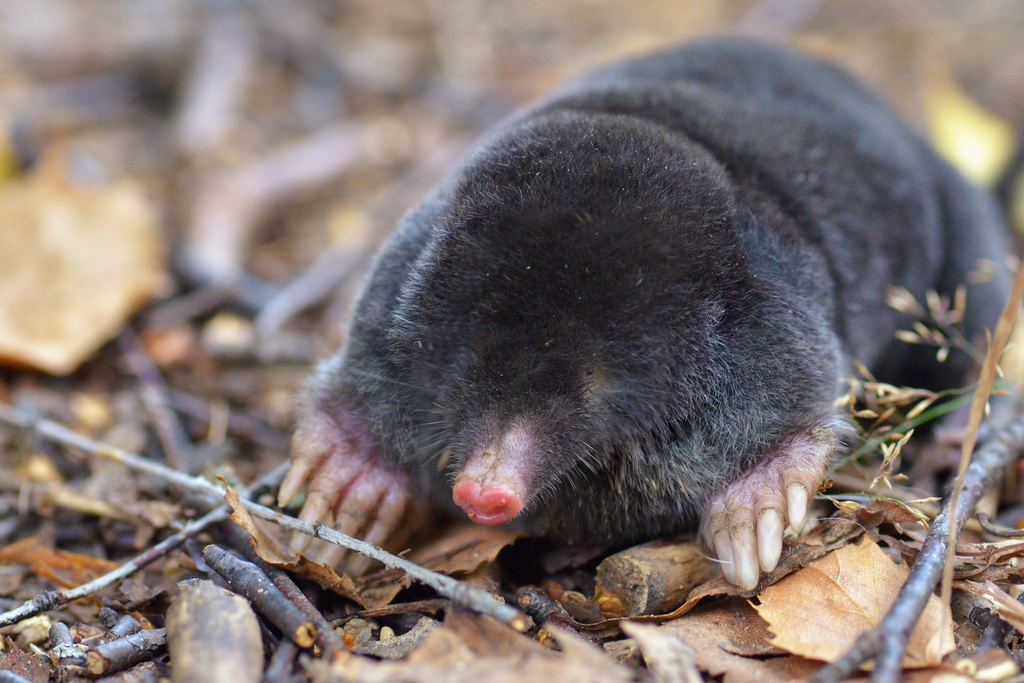
European Mole
Talpa europaea
Also known as: Common Mole, Mole, Maulwurf, Taupe D'europe, Topo Europeo
Habitat
Ground
Diet
Invertebrate
Active Time
Diurnal
Size
77 g
About This Species
Almost entirely subterranean, this mole is rarely seen above ground; its presence is usually announced instead by fresh molehills pushed up in lawns, meadows, and cultivated soil across Europe. It digs and forages for earthworms and soil invertebrates around the clock, regardless of time of day, so molehill activity can appear at any season when the ground is soft enough to work. Actually seeing the animal itself typically means finding one displaced onto the surface, often by flooding or predation rather than by choice.
Ethical Viewing Guidelines
- Because encounters are almost always with molehills rather than the animal, the main consideration is not viewing distance but restraint around its burrow system, which can be damaged by digging or heavy foot traffic.
- Regulations on mole control and trapping vary considerably by country, with some places requiring permits or restricting methods, so anyone dealing with mole activity on land should check local rules rather than assume a blanket right to remove them.
- If a mole is found above ground, minimal handling and a quick return to loose soil or cover is the safest course.
Seasonal Activity
346,020 sightings · 2000–2026
Citizen science records via GBIF
Classification
- Kingdom
- Animalia
- Phylum
- Chordata
- Class
- Mammalia
- Order
- Soricomorpha
- Family
- Talpidae
Traits
- Diet
- Invertebrate
- Foraging
- Ground
- Activity
- Diurnal
- Body mass
- 77 g
- Home range
- 0 ha
Photo
(c) Bogdan V. Kryzhatyuk, some rights reserved (CC BY-NC-SA), uploaded by Bogdan V. Kryzhatyuk
CC-BY-NC-SA-4.0
Occurrence data from GBIF.