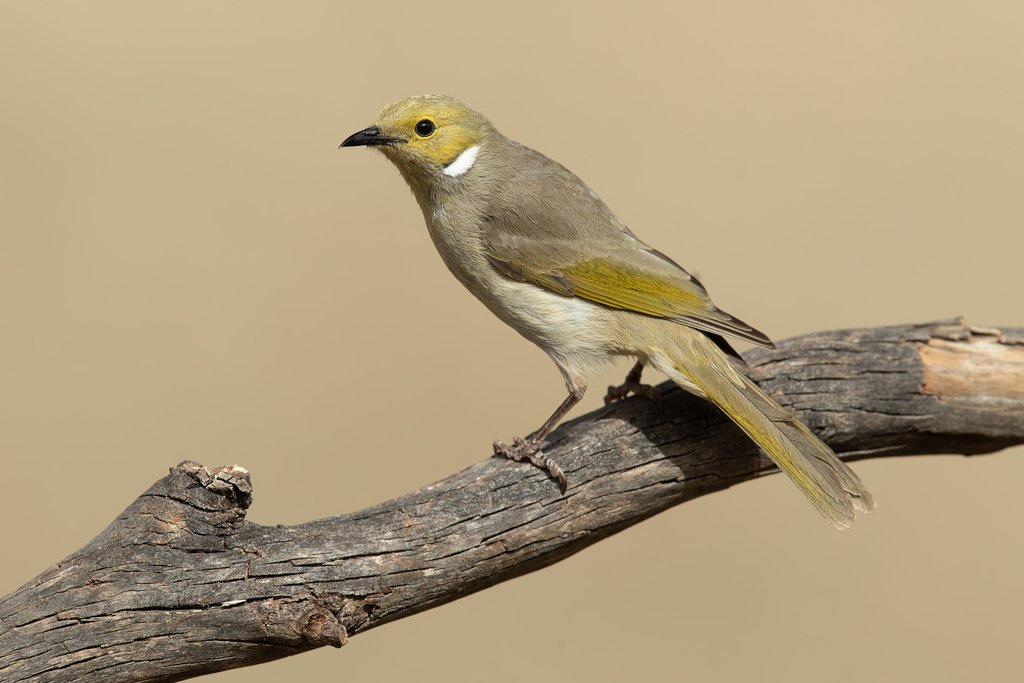
White-Plumed Honeyeater
Ptilotula penicillata
About This Species
A common honeyeater of dry woodland, mallee, and scrub across inland and southern Australia, usually seen moving actively through flowering eucalypts and shrubs in search of nectar and insects. Its persistent, chattering calls and habit of foraging in loose, noisy groups make it one of the easier honeyeaters to detect. Flowering season in eucalypt woodland offers the most reliable and active viewing.
Ethical Viewing Guidelines
- This is an active, often approachable species in open woodland, but keep a reasonable distance from any nest, which is a small cup built low in a shrub or tree fork and vulnerable to disturbance.
- It is protected under Australian wildlife legislation, which prohibits killing, injuring, or taking native birds without authorization, though the details differ between states and territories.
- Avoid pruning or disturbing flowering shrubs where groups are actively feeding, since this is their primary food source during the season.
LCAvesPasseriformesMeliphagidae
Seasonal Activity
584,512 sightings · 2000–2026
Citizen science records via GBIF
All monthsThis month
Classification
- Kingdom
- Animalia
- Phylum
- Chordata
- Class
- Aves
- Order
- Passeriformes
- Family
- Meliphagidae
Photo
(c) JJ Harrison, some rights reserved (CC BY-SA)
CC-BY-SA-4.0
Occurrence data from GBIF.