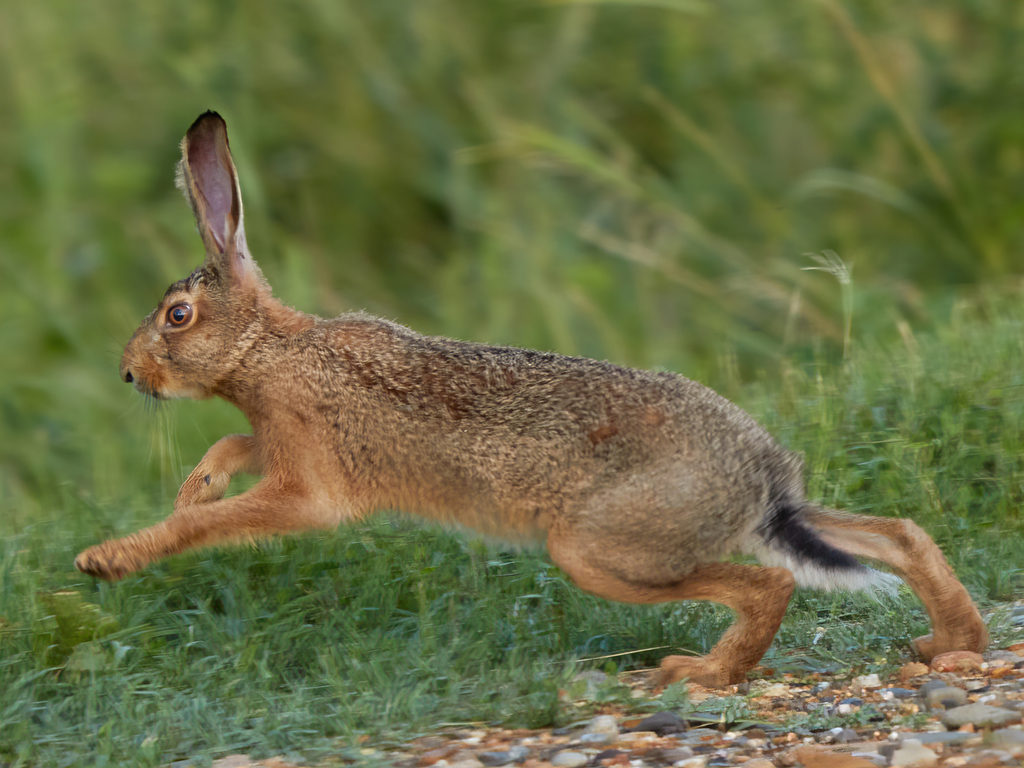
European Hare
Lepus europaeus
Also known as: Brown Hare, Common Hare, European Brown Hare, Hare
Habitat
Ground
Diet
PlantSeed
Active Time
Nocturnal
Size
3.7 kg
About This Species
This hare lives in open farmland, grassland and field margins across Europe, spending the day resting in a shallow scrape called a form and becoming most active from dusk through the night, when it feeds on grasses, herbs and crops. The best-known behaviour is the springtime "boxing," when hares rear up on their hind legs and strike out at one another, usually a female fending off an overeager male rather than two males fighting. Dawn, dusk and moonlit evenings in late winter and early spring give the best chance of seeing boxing or general activity.
Ethical Viewing Guidelines
- Watch from a vehicle, hide or a distance across open ground, since hares rely on keeping still and will bolt if approached directly, wasting energy especially in cold conditions.
- It is protected from certain forms of disturbance and unregulated killing under national wildlife and game law in much of Europe, though hunting seasons, close seasons and specific protections vary considerably by country.
- Avoid walking through fields where a form or leverets might be hidden, particularly in spring.
Seasonal Activity
976,793 sightings · 2000–2026
Citizen science records via GBIF
Classification
- Kingdom
- Animalia
- Phylum
- Chordata
- Class
- Mammalia
- Order
- Lagomorpha
- Family
- Leporidae
Traits
- Diet
- PlantSeed
- Foraging
- Ground
- Activity
- Nocturnal
- Body mass
- 3.7 kg
- Home range
- 31 ha
Photo
(c) Kurilin M S, some rights reserved (CC BY-NC), uploaded by Kurilin M S
CC-BY-NC-4.0
Occurrence data from GBIF.