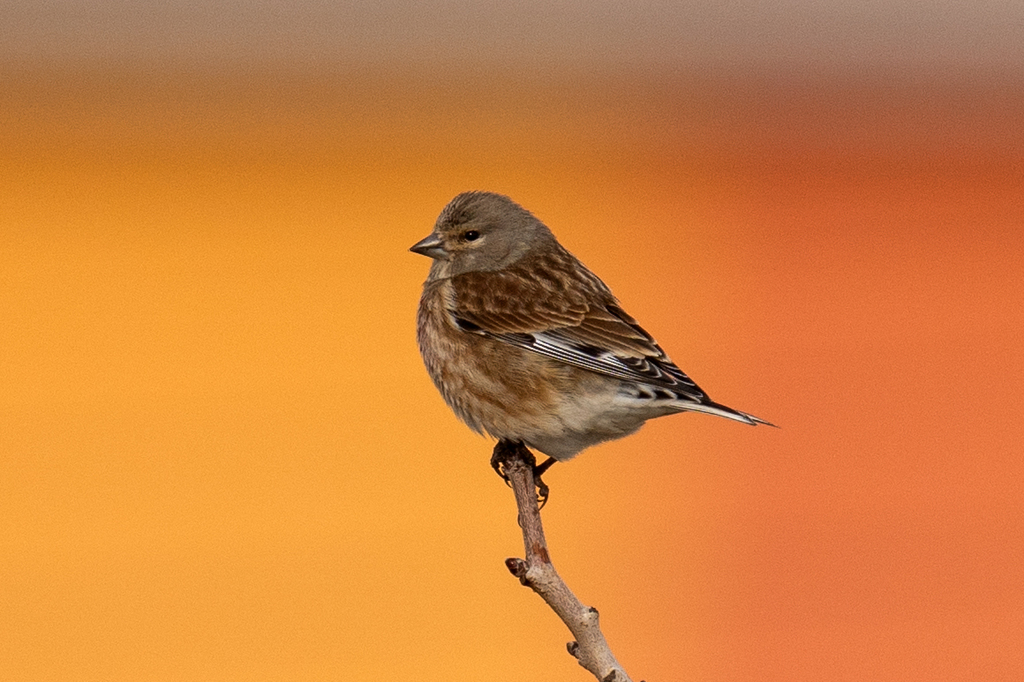
Common Linnet
Linaria cannabina
Also known as: Eurasian Linnet, Linnet
About This Species
Watch hedgerows, farmland edges and scrubby heathland, where small flocks feed on seeds from thistles and other wild plants, often flushing up together in a loose, twittering group. The male's pink-flushed breast and forehead are most vivid in breeding plumage during spring and summer, while winter brings larger mixed finch flocks to weedy field margins and stubble. A soft, twittering song delivered from a low perch or in flight is a good way to locate them even before they are seen.
Ethical Viewing Guidelines
- A distance of a few metres is normally enough not to disturb feeding or singing birds, backing away slowly if a flock becomes agitated or stops feeding.
- Like other common farmland birds, nests and eggs are protected from deliberate destruction or disturbance under wild bird laws across much of Europe, so avoid searching hedgerows for nests in spring.
- Keeping to paths and avoiding pushing into dense hedge or scrub habitat during the breeding season helps protect nesting attempts that are easily overlooked.
LCAvesPasseriformesFringillidae
Seasonal Activity
2,633,041 sightings · 2000–2026
Citizen science records via GBIF
All monthsThis month
Classification
- Kingdom
- Animalia
- Phylum
- Chordata
- Class
- Aves
- Order
- Passeriformes
- Family
- Fringillidae
Photo
(c) Максим Стефанович, some rights reserved (CC BY-NC), uploaded by Максим Стефанович
CC-BY-NC-4.0
Occurrence data from GBIF.