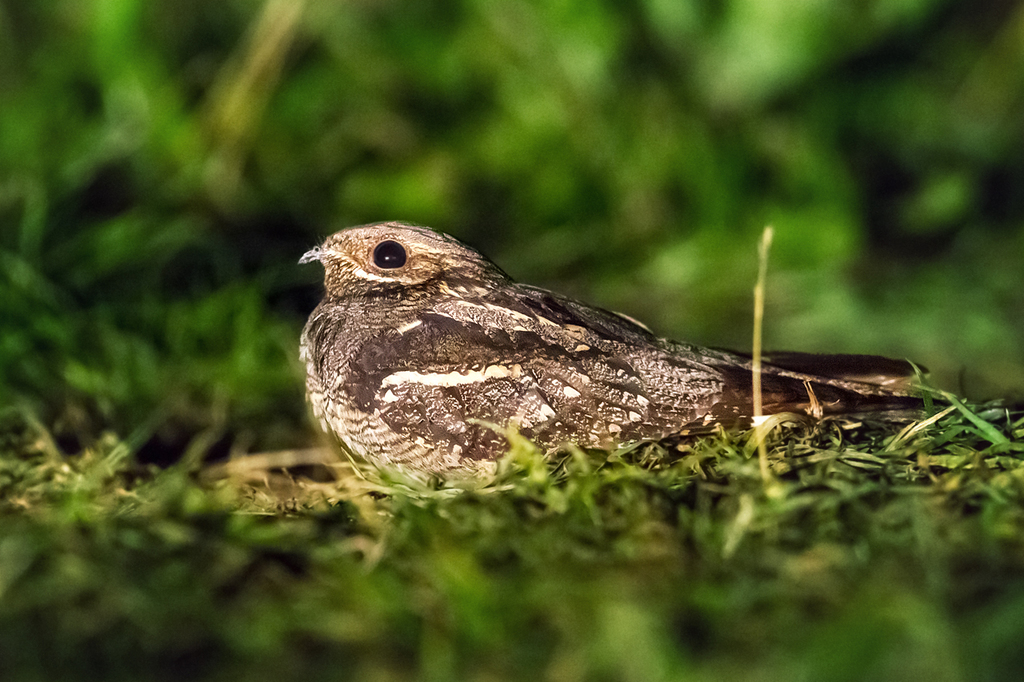
European Nightjar
Caprimulgus europaeus
Also known as: Nightjar, Eurasian Nightjar
Habitat
Understory
Diet
Invertebrate
Active Time
Nocturnal
Size
67 g
About This Species
This cryptic, ground-nesting nightjar is most often detected at dusk by its long, mechanical churring song, delivered from a perch on heathland, open woodland edges or recently felled forest across its European and western Asian breeding range. By day it rests motionless on the ground or a low branch, relying on mottled plumage to stay hidden, and is easiest to see in flight at twilight when it hawks for moths over open ground. Warm, still evenings from late spring through summer on breeding heathland are the best time to look and listen.
Ethical Viewing Guidelines
- Stay on paths and keep to at least 20-30 metres from calling birds or any suspected nest site, since eggs and young are laid directly on open ground and are easily trampled or abandoned if adults are repeatedly disturbed.
- This species and its nests receive legal protection under wildlife law in several European countries, though the specifics differ by jurisdiction, so check local guidance, particularly around known heathland reserves.
- Avoid torchlight or flash photography directed at roosting or nesting birds, and keep dogs on leads on heathland during the breeding season.
Seasonal Activity
238,786 sightings · 2000–2026
Citizen science records via GBIF
Classification
- Kingdom
- Animalia
- Phylum
- Chordata
- Class
- Aves
- Order
- Caprimulgiformes
- Family
- Caprimulgidae
Traits
- Diet
- Invertebrate
- Foraging
- Understory
- Activity
- Nocturnal
- Body mass
- 67 g
Photo
(c) Вячеслав Ложкин, some rights reserved (CC BY-NC), uploaded by Вячеслав Ложкин
CC-BY-NC-4.0
Occurrence data from GBIF.