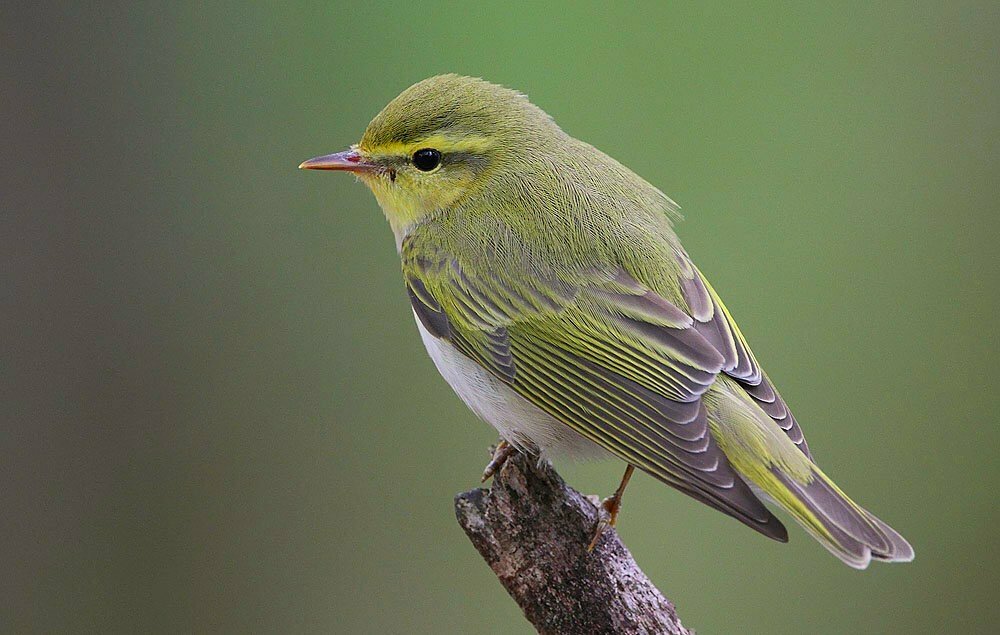
Wood Warbler
Phylloscopus sibillatrix
About This Species
This slim, yellow-and-white warbler breeds in mature deciduous woodland with an open, shaded canopy and little understory, particularly beech and oak stands across much of Europe, arriving from African wintering grounds in mid to late spring. Males sing a distinctive accelerating trill from high, exposed perches, often dropping into a fluttering song-flight, which is by far the easiest way to locate one in dense summer foliage. Late April through June, during peak song activity, offers the best chance of a good view.
Ethical Viewing Guidelines
- Staying on paths and viewing from a reasonable distance below the canopy is enough to watch and hear a singing male without disturbing it, since flushing a bird from its territory can interrupt courtship or nest-building.
- As a migratory species breeding across the European Union and the UK, it and its nest are protected under wild bird legislation in those countries, though specific rules and enforcement vary by nation, so avoid approaching a suspected nest site or using recordings near an active territory.
- Woodland floor nests are especially vulnerable to trampling, so keeping to established trails during the breeding season is worthwhile.
LCAvesPasseriformesPhylloscopidae
Seasonal Activity
414,386 sightings · 2000–2026
Citizen science records via GBIF
All monthsThis month
Classification
- Kingdom
- Animalia
- Phylum
- Chordata
- Class
- Aves
- Order
- Passeriformes
- Family
- Phylloscopidae
Photo
(c) Steve Garvie, some rights reserved (CC BY-SA)
CC-BY-SA-4.0
Occurrence data from GBIF.