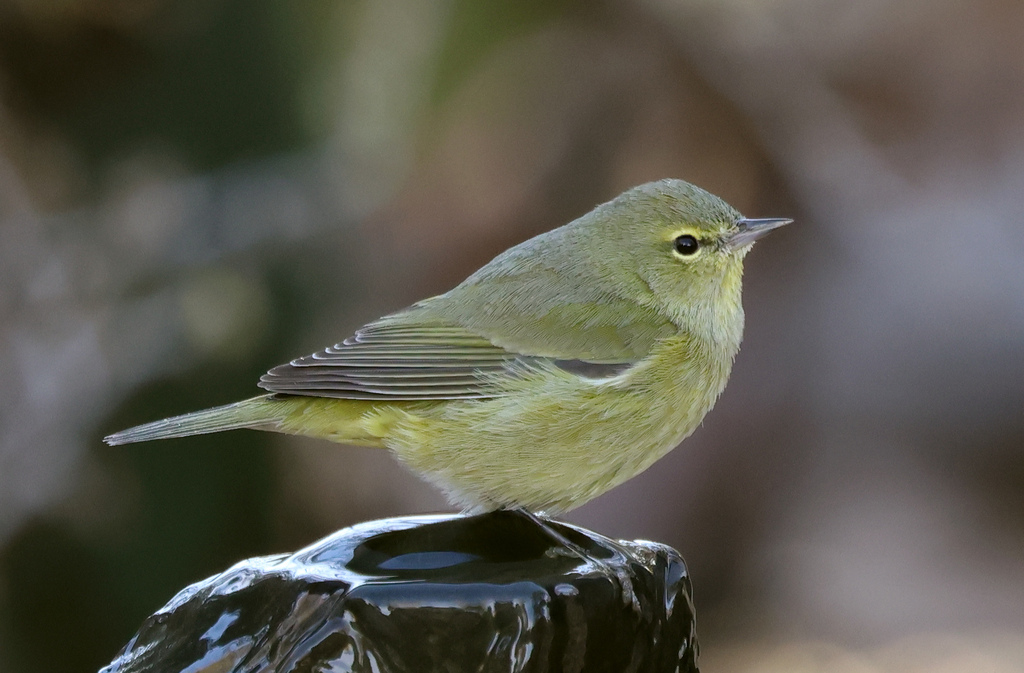
Orange-Crowned Warbler
Leiothlypis celata
About This Species
A plain, olive-gray warbler with only a faint orange crown patch rarely visible in the field, it favors shrubby thickets, forest edges, and streamside tangles rather than open canopy. Its song is a thin, weakly accelerating trill that often drops in pitch at the end, and it can be picked out by habit as it forages low, gleaning insects from leaves rather than flycatching. Migration in spring and fall, and winter in the southern and coastal parts of its range, are the most reliable times to see it, often mixed into flocks of other small songbirds.
Ethical Viewing Guidelines
- Because it forages low and close to cover, quiet, slow movement along a trail edge is usually enough to get a good look without pushing into the brush itself.
- In the United States and Canada it is protected under migratory bird treaty legislation, and as with other small songbirds, prolonged use of recorded playback to draw it out is best avoided, particularly on the breeding grounds.
- Standard trail-based birdwatching distance is adequate for this species.
LCAvesPasseriformesParulidae
Seasonal Activity
2,838,355 sightings · 2000–2026
Citizen science records via GBIF
All monthsThis month
Classification
- Kingdom
- Animalia
- Phylum
- Chordata
- Class
- Aves
- Order
- Passeriformes
- Family
- Parulidae
Photo
(c) Ad Konings, some rights reserved (CC BY-NC), uploaded by Ad Konings
CC-BY-NC-4.0
Occurrence data from GBIF.