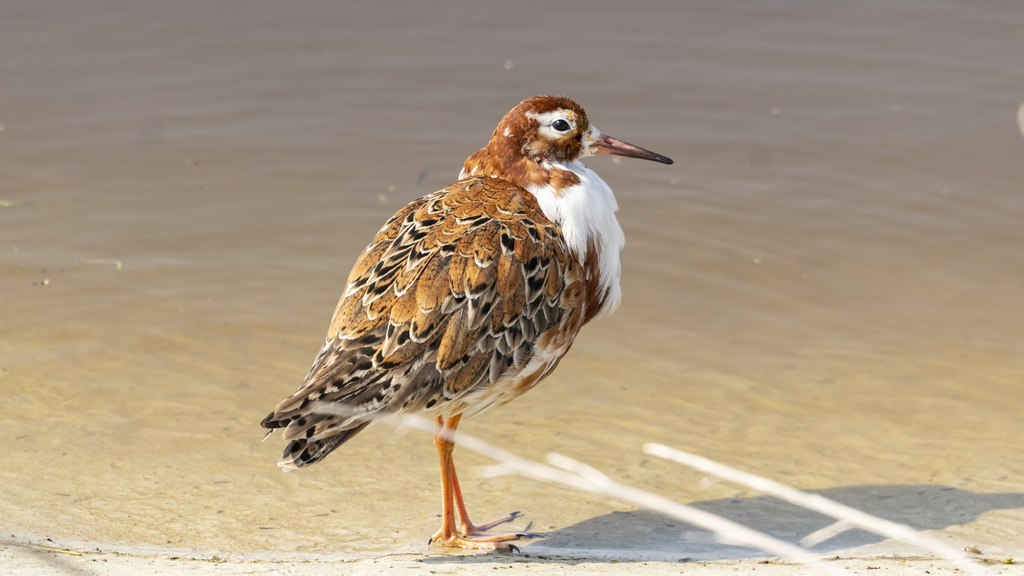
Ruff
Calidris pugnax
About This Species
This medium-sized wader is best known for the males' extraordinary lekking displays on wet grassland and tundra, where they gather in groups to show off ornate neck ruffs of black, chestnut or white in spring. Outside the breeding season look for it on muddy estuaries, flooded fields and lake margins, feeding with a steady probing action alongside other waders. Passage periods in spring and autumn are the most reliable times to see larger flocks at wetland reserves.
Ethical Viewing Guidelines
- A distance of at least 50 metres is sensible around feeding or roosting flocks on open mud, since waders flush easily and repeated disturbance can cost them the energy reserves they need for migration.
- Breeding leks and nests are protected in most of the species' Eurasian range, and observers should stay off wet meadows and tundra nesting areas entirely during the spring display season.
- Where hides or screened paths exist at wetland sites, using them is the best way to watch lekking behaviour without affecting it.
LCAvesCharadriiformesScolopacidae
Seasonal Activity
1,360,339 sightings · 2000–2026
Citizen science records via GBIF
All monthsThis month
Classification
- Kingdom
- Animalia
- Phylum
- Chordata
- Class
- Aves
- Order
- Charadriiformes
- Family
- Scolopacidae
Photo
(c) Filipp Suvorov, some rights reserved (CC BY-NC), uploaded by Filipp Suvorov
CC-BY-NC-4.0
Occurrence data from GBIF.