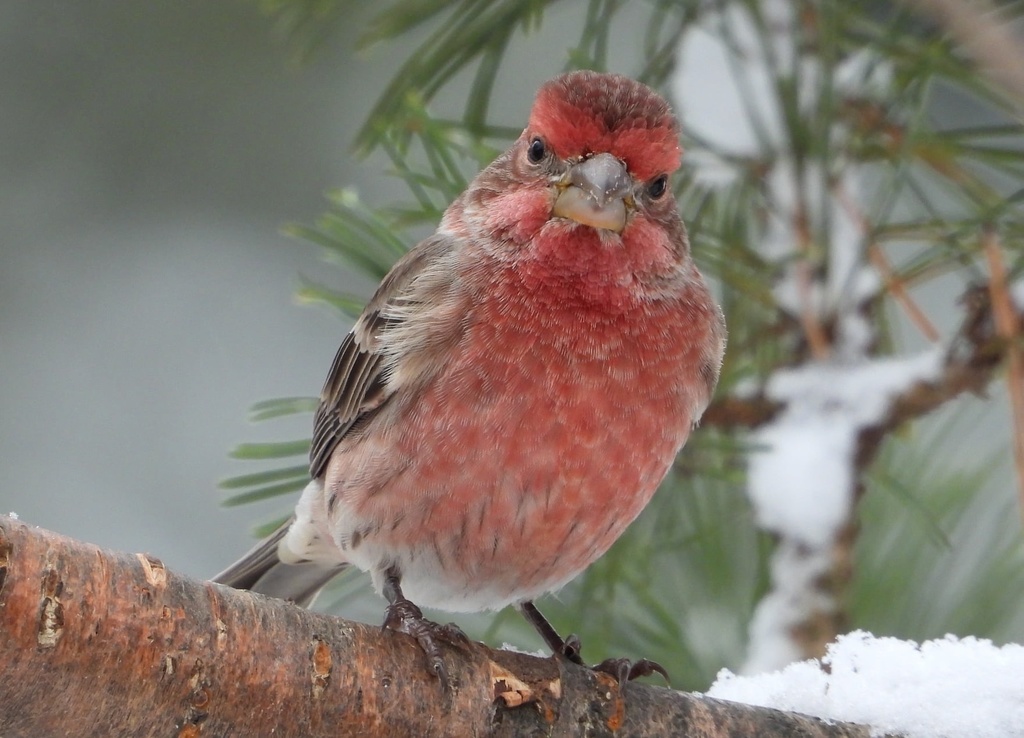
House Finch
Haemorhous mexicanus
About This Species
Males show a raspberry-red wash across the head, breast, and rump, while females and juveniles are streaky brown, and both sexes have a stubby, curved bill suited to cracking seeds. This adaptable finch is a fixture at backyard feeders and city parks across North America, often heard giving a long, warbling song from rooftops, wires, and shrub tops. It nests in a wide range of sites, from tree forks to hanging planters and building ledges, and breeds readily close to people.
Ethical Viewing Guidelines
- Because this finch gathers in numbers at feeders, it is vulnerable to a contagious eye disease that causes crusty, swollen eyes and spreads fastest at dirty or crowded feeding stations, so clean feeders and bird baths every one to two weeks with a diluted bleach solution and space feeders out if you notice sick birds.
- Give nesting birds a few metres of space and avoid disturbing active nests, which are protected under wildlife law in the US and many other countries.
- If you see a bird with swollen or crusted eyes, it is best to take feeders down for a few days to encourage birds to disperse.
LCAvesPasseriformesFringillidae
Seasonal Activity
18,468,140 sightings · 2000–2026
Citizen science records via GBIF
All monthsThis month
Classification
- Kingdom
- Animalia
- Phylum
- Chordata
- Class
- Aves
- Order
- Passeriformes
- Family
- Fringillidae
Photo
(c) Coleen Lawlor, some rights reserved (CC BY-NC), uploaded by Coleen Lawlor
CC-BY-NC-4.0
Occurrence data from GBIF.