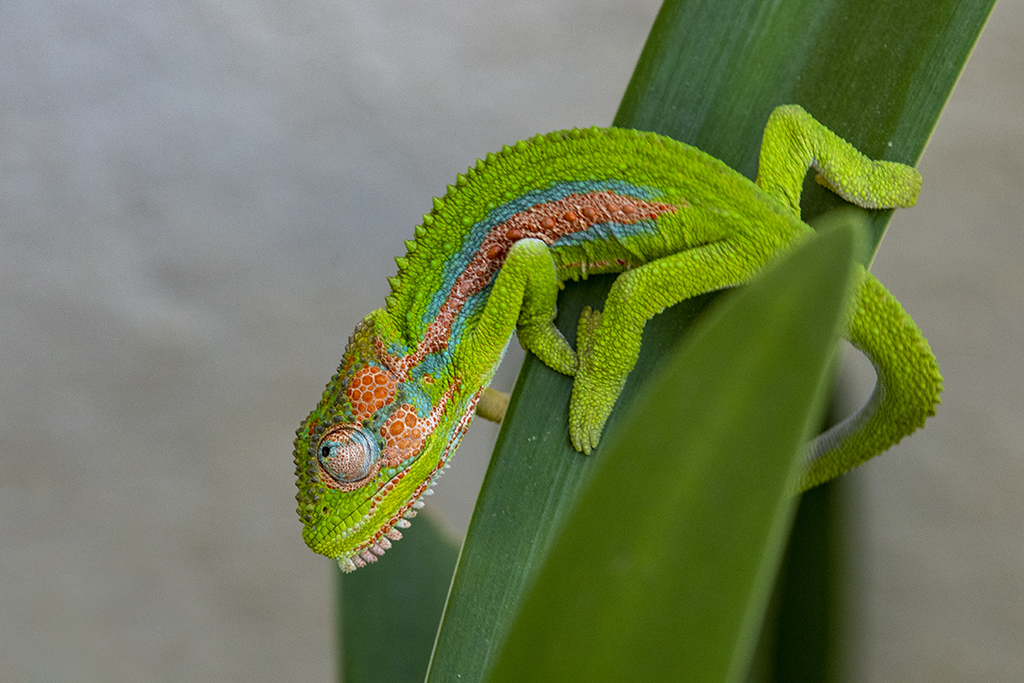
Cape Dwarf Chameleon
Bradypodion pumilum
About This Species
Found primarily in the fynbos and scrubby vegetation of the southwestern Cape, this slow-moving lizard spends most of its time clinging to shrub branches and small trees, gripping with its zygodactyl feet and using deliberate, rocking movements to mimic wind-blown foliage. Scan carefully along the mid-levels of dense bushes and shrubs, looking for the distinctive laterally flattened body and the subtle color shifts — from muted greens and browns to brighter displays when threatened or during courtship — rather than relying on movement, as individuals freeze instinctively when disturbed. Late spring through early summer offers the best viewing, when warmer temperatures increase activity and males engage in conspicuous color displays, and morning hours after the chill has lifted are ideal since individuals bask in exposed positions before retreating deeper into vegetation as the day heats up.
Ethical Viewing Guidelines
- Observe from at least 1–2 metres without touching, handling, or removing individuals from vegetation, as stress responses such as colour change and freezing indicate the animal is already disturbed.
- In South Africa, this species is protected under the National Environmental Management: Biodiversity Act (NEMBA) and Western Cape provincial legislation, meaning collection, trade, or deliberate disturbance without a permit is prohibited.
- Keep visits brief, avoid using flash photography or artificial lighting at night, and resist the temptation to reposition individuals for a better view.
Seasonal Activity
5,829 sightings · 2001–2026
Citizen science records via GBIF
Classification
- Kingdom
- Animalia
- Phylum
- Chordata
- Class
- Squamata
- Order
- NaN
- Family
- Chamaeleonidae
Photo
(c) carienc2, some rights reserved (CC BY-NC)
CC-BY-NC-4.0
Occurrence data from GBIF.