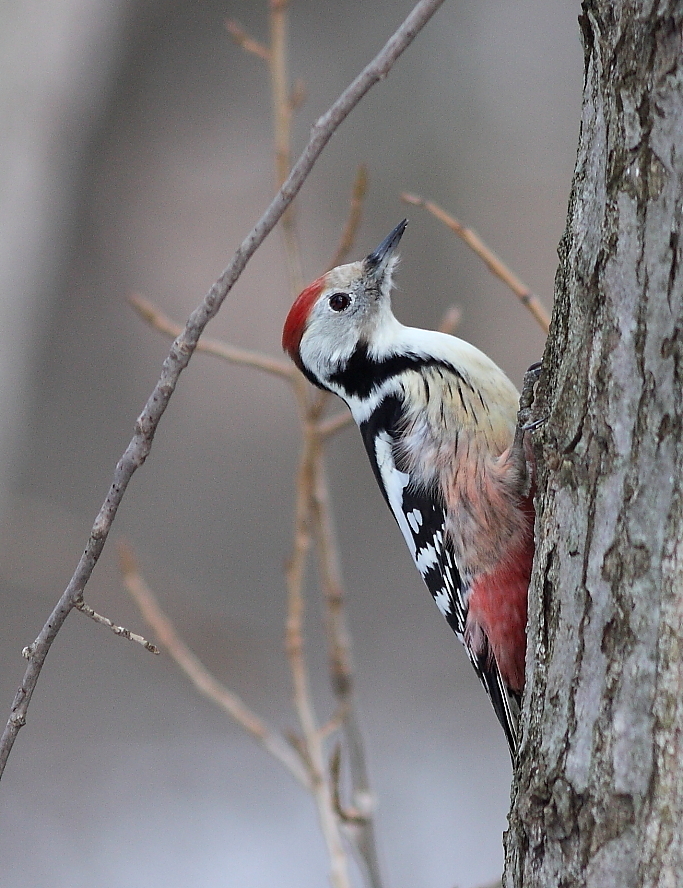
Middle Spotted Woodpecker
Dendrocoptes medius
About This Species
This woodpecker specialises in mature deciduous forest, particularly old oak stands with loose bark, where it forages by prising off bark flakes rather than heavy drumming, making it quieter and harder to locate than other woodpeckers. Look and listen for its soft, nasal calls and light tapping high in the canopy, and check old-growth oak woodland across central and eastern Europe, especially in spring when calling activity increases during the breeding season. Its red crown patch and streaked flanks help distinguish it from similar spotted woodpeckers once spotted.
Ethical Viewing Guidelines
- This species depends on mature woodland with deadwood and old bark, so viewing from established paths without disturbing nest trees or removing bark helps protect its specialised habitat.
- Across the European Union, woodpeckers and their nest sites are protected under the Birds Directive, and most range states additionally protect nest holes during the breeding season, so avoid approaching or investigating cavities closely.
- Because it depends on structurally complex old trees, supporting retention of deadwood in managed woodland is more useful to the species than any specific viewing distance.
NEAvesPiciformesPicidae
Seasonal Activity
255,336 sightings · 2000–2026
Citizen science records via GBIF
All monthsThis month
Classification
- Kingdom
- Animalia
- Phylum
- Chordata
- Class
- Aves
- Order
- Piciformes
- Family
- Picidae
Photo
(c) Margrit, some rights reserved (CC BY-NC-SA)
CC-BY-NC-SA-4.0
Occurrence data from GBIF.