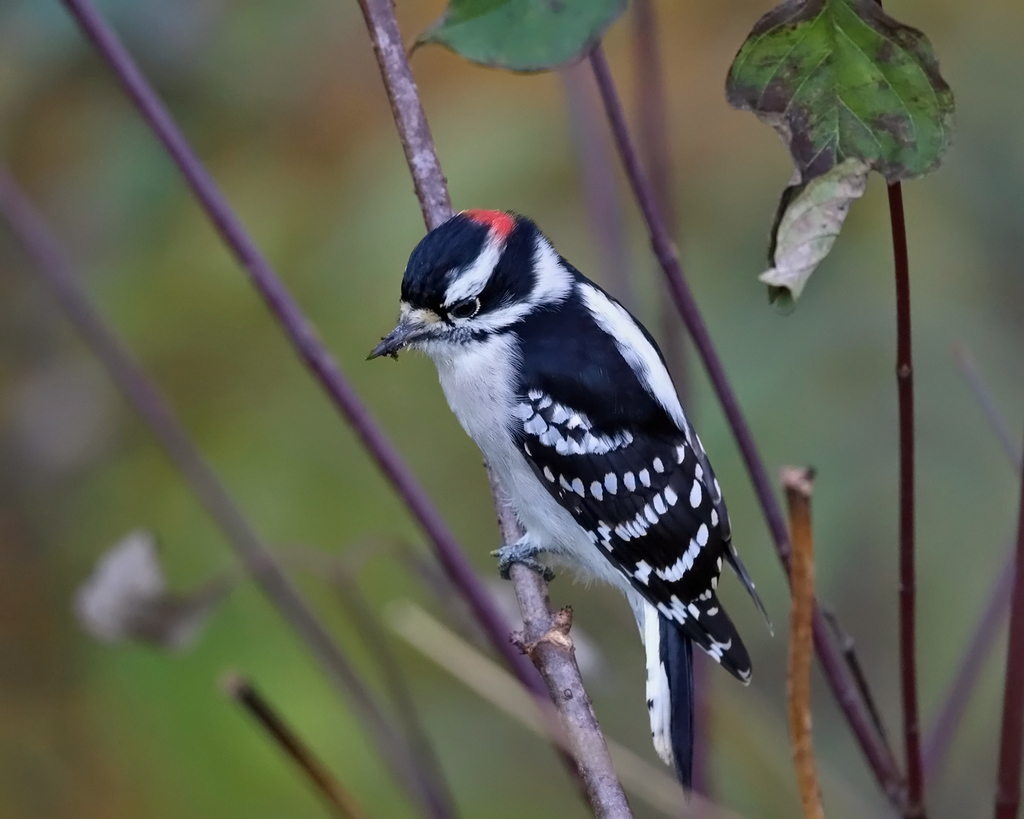
Downy Woodpecker
Dryobates pubescens
About This Species
North America's smallest woodpecker, distinguished from the near-identical but larger Hairy Woodpecker by its stubby, almost dainty bill and soft, drumming taps rather than loud hammering. Look for it clinging to tree trunks and thin branches in deciduous woodland, parks, and gardens, often working suet feeders in winter, with males showing a small red patch on the back of the head that females lack. It is active year-round, foraging low on dead wood and stems for insect larvae, and pairs often hold the same territory through the seasons.
Ethical Viewing Guidelines
- This woodpecker is generally tolerant of quiet observers at a normal walking distance and will often keep foraging if you stay still and avoid sudden movement.
- Avoid disturbing active nest cavities, especially during the spring excavation and nestling period, since native woodpeckers and their nests are protected under wildlife law in the US and many other countries.
- If you use suet feeders to attract it, keep them clean and check regularly for mould, since spoiled suet can make visiting birds sick.
LCAvesPiciformesPicidae
Seasonal Activity
18,231,501 sightings · 2000–2026
Citizen science records via GBIF
All monthsThis month
Classification
- Kingdom
- Animalia
- Phylum
- Chordata
- Class
- Aves
- Order
- Piciformes
- Family
- Picidae
Photo
(c) Tom Murray, some rights reserved (CC BY-NC), uploaded by Tom Murray
CC-BY-NC-4.0
Occurrence data from GBIF.