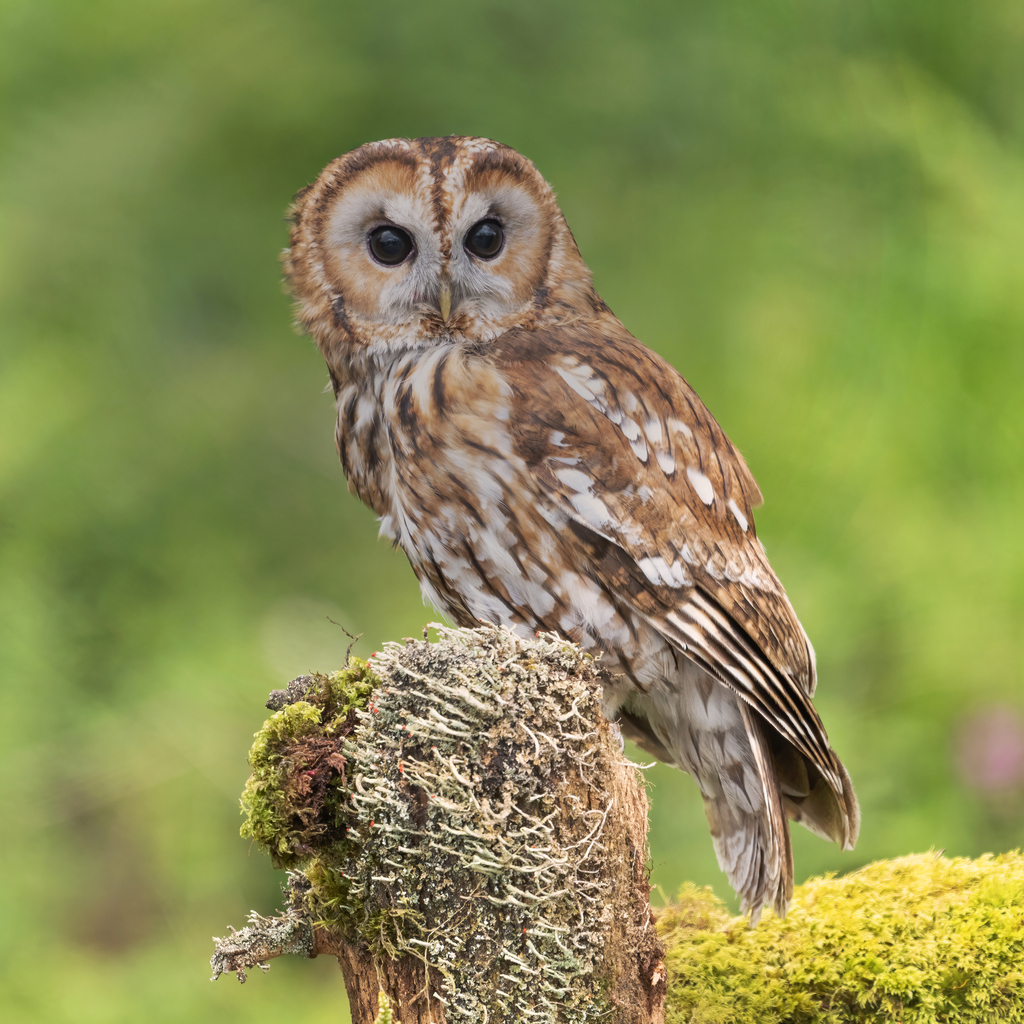
Tawny Owl
Strix aluco
Also known as: Eurasian Tawny Owl
Habitat
Ground
Diet
VertFishScav
Active Time
Nocturnal
Size
472 g
About This Species
Listen at dusk and after dark for its familiar hooting duet in woodland, parkland and large gardens with mature trees, since this owl is rarely seen by day and roosts tucked against a trunk or in dense ivy. Its call carries well on still nights, and following it quietly can lead to a silhouette against the sky or a pair of eyeshine reflections in torchlight. Late winter through early spring is the most vocal period as pairs establish and defend territories.
Ethical Viewing Guidelines
- Keep noise and light to a minimum and avoid shining a torch directly and repeatedly into a roosting bird's eyes, since this can cause stress and disorient a nocturnal hunter.
- This species is protected under wildlife law in the United Kingdom and much of Europe, with penalties for intentional disturbance at or near an active nest.
- If you locate a daytime roost, view briefly from a distance and move on rather than lingering, since repeated visits can cause it to abandon a favored site.
LCAvesStrigiformesStrigidae
Seasonal Activity
785,643 sightings · 2000–2026
Citizen science records via GBIF
All monthsThis month
Classification
- Kingdom
- Animalia
- Phylum
- Chordata
- Class
- Aves
- Order
- Strigiformes
- Family
- Strigidae
Traits
- Diet
- VertFishScav
- Foraging
- Ground
- Activity
- Nocturnal
- Body mass
- 472 g
Photo
(c) caroline legg, some rights reserved (CC BY)
CC-BY-4.0
Occurrence data from GBIF.