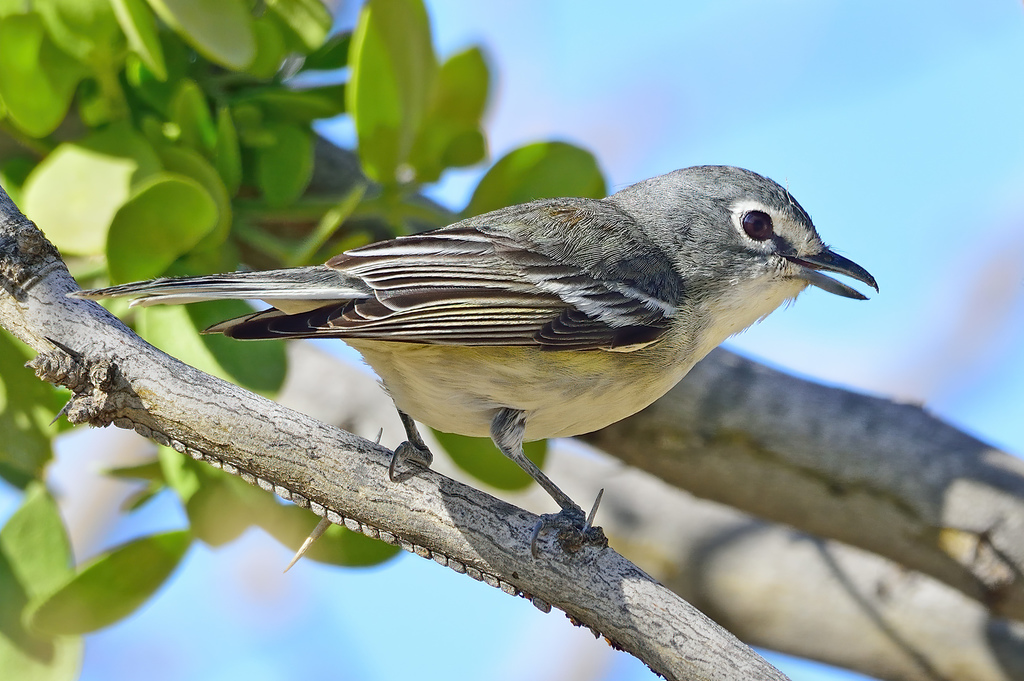
Plumbeous Vireo
Vireo plumbeus
Also known as: Central American Solitary Vireo, Central American Vireo, Notable Vireo, Plumbeous Solitary Vireo
About This Species
This vireo breeds in pine-oak and coniferous woodland across mountain ranges of the southwestern United States and Mexico, moving deliberately through the mid and upper canopy as it searches foliage for insects, with occasional slow hops and pauses that make it easier to follow than more active songbirds. Its slow, husky, up-and-down phrased song carries well through open pine woodland during the spring and summer breeding season. Scanning mixed conifer stands during the breeding months, when males sing persistently from exposed perches, gives the best chance of a good look.
Ethical Viewing Guidelines
- A slow approach and pausing to let the bird come into view works better than pushing through the canopy toward it, since it will simply move to another tree if crowded.
- It is protected as a native migratory bird under both United States and Mexican law, so nests should not be approached or handled during breeding season.
- Staying on established trails through pine-oak habitat during nesting months reduces the risk of disturbing a hidden nest in the understory.
Seasonal Activity
247,528 sightings · 2000–2026
Citizen science records via GBIF
Classification
- Kingdom
- Animalia
- Phylum
- Chordata
- Class
- Aves
- Order
- Passeriformes
- Family
- Vireonidae
Photo
(c) Ad Konings, some rights reserved (CC BY-NC), uploaded by Ad Konings
CC-BY-NC-4.0
Occurrence data from GBIF.