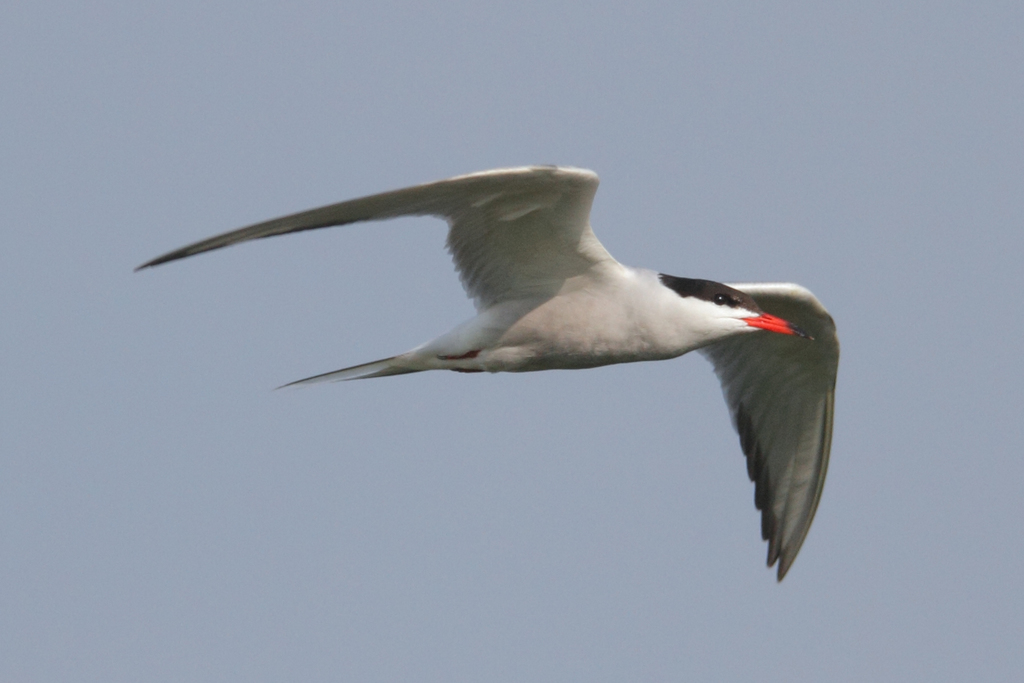
Common Tern
Sterna hirundo
Also known as: Booby
Habitat
Aquatic
Diet
VertFishScav
Active Time
Diurnal
Size
129 g
About This Species
Common Terns favour coastal beaches, estuaries, and inland lakes, where they hover and plunge-dive for small fish, often in loose colonies on sandy or gravel shores. Look for the black cap, pale gray body, and forked tail, and listen for their sharp, grating calls over breeding colonies. Late spring through summer is the best season, when birds are actively fishing near nesting colonies on undisturbed beaches and islands.
Ethical Viewing Guidelines
- Keep well back from nesting colonies, ideally staying on marked paths or behind any posted buffer, since terns nest in the open and abandon eggs or chicks readily when disturbed.
- Many colonies are legally protected during the breeding season under national wildlife laws, and specific closures or distances are often posted locally and should be followed exactly.
- Diving, alarm-calling birds overhead are a sign of a nearby colony and a cue to retreat rather than continue closer.
LCAvesCharadriiformesLaridae
Seasonal Activity
2,647,175 sightings · 2000–2026
Citizen science records via GBIF
All monthsThis month
Classification
- Kingdom
- Animalia
- Phylum
- Chordata
- Class
- Aves
- Order
- Charadriiformes
- Family
- Laridae
Traits
- Diet
- VertFishScav
- Foraging
- Aquatic
- Activity
- Diurnal
- Body mass
- 129 g
Photo
(c) Mark Kilner, some rights reserved (CC BY-NC-SA)
CC-BY-NC-SA-4.0
Occurrence data from GBIF.