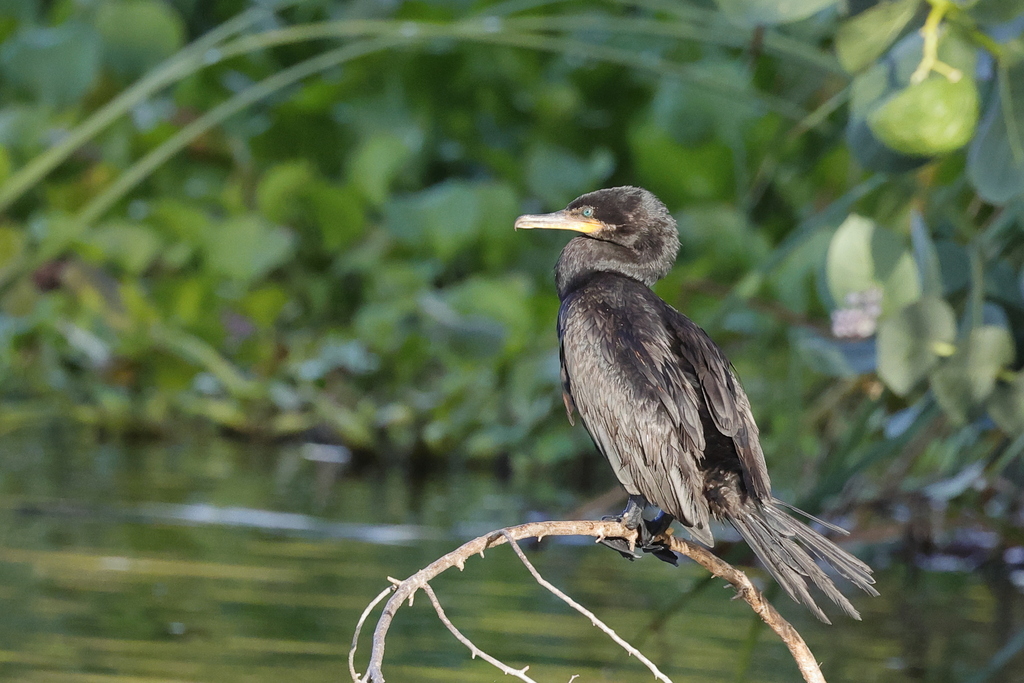
Neotropic Cormorant
Phalacrocorax brasilianus
Also known as: Neotropical Cormorant, Bigua Cormorant, Olivaceous Cormorant
About This Species
Look for a slim, dark waterbird with a long tail and hooked bill perched with wings spread to dry on branches, docks or rocks near freshwater lakes, rivers and coastal lagoons throughout Central and South America. It swims low in the water with just the head and neck visible before diving to catch fish underwater. Sunny mornings after active fishing bouts give the best chance of observing the characteristic wing-drying posture at close range.
Ethical Viewing Guidelines
- Keep at least 20 metres from perched or nesting birds, since flushing a drying or roosting cormorant costs significant energy and can expose eggs or chicks at nest sites.
- Protections for this species vary considerably across its many range countries in Latin America, so local regulations should be checked rather than assumed.
- Avoid close approach by boat to nesting colonies, which are often on isolated snags or small islands specifically to avoid disturbance.
LCAvesSuliformesPhalacrocoracidae
Seasonal Activity
1,495,147 sightings · 2000–2026
Citizen science records via GBIF
All monthsThis month
Classification
- Kingdom
- Animalia
- Phylum
- Chordata
- Class
- Aves
- Order
- Suliformes
- Family
- Phalacrocoracidae
Photo
(c) Daniel Onea, some rights reserved (CC BY-NC), uploaded by Daniel Onea
CC-BY-NC-4.0
Occurrence data from GBIF.