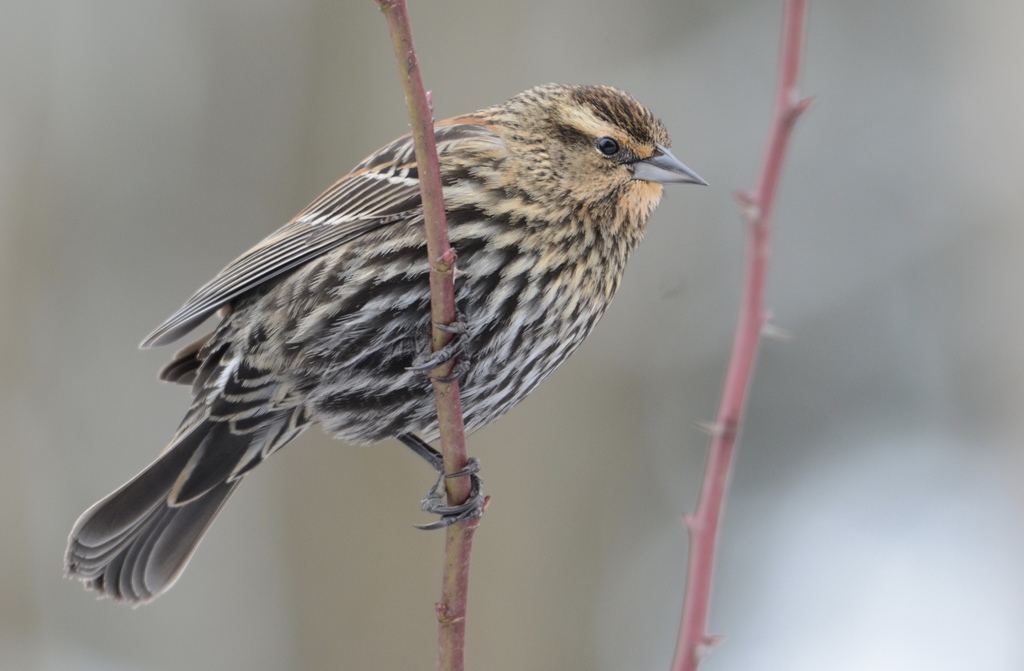
Red-Winged Blackbird
Agelaius phoeniceus
Habitat
Ground
Diet
Omnivore
Active Time
Diurnal
Size
51 g
About This Species
Look for males perched on cattails and marsh vegetation, wings flared to show scarlet-and-gold epaulets while singing a rasping conk-la-ree territorial call. Common at the edges of freshwater marshes, wet meadows, and roadside ditches across North America, most conspicuous from early spring through midsummer when males display and females forage low in dense reeds for insects and seeds. Large post-breeding flocks gather in fields and reedbeds through autumn and winter.
Ethical Viewing Guidelines
- Nesting males are famously territorial and will swoop at people, pets, and even large mammals that stray too close to a nest, so give displaying birds a wide berth rather than lingering near marsh edges in spring and early summer.
- Nests and eggs are protected under the US Migratory Bird Treaty Act, so avoid handling them; outside North America check local wildlife law, since protections vary by country.
- If a bird dive-bombs you, the calmest response is simply to walk on rather than swat at it.
LCAvesPasseriformesIcteridae
Seasonal Activity
20,215,031 sightings · 2000–2026
Citizen science records via GBIF
All monthsThis month
Classification
- Kingdom
- Animalia
- Phylum
- Chordata
- Class
- Aves
- Order
- Passeriformes
- Family
- Icteridae
Traits
- Diet
- Omnivore
- Foraging
- Ground
- Activity
- Diurnal
- Body mass
- 51 g
Photo
(c) Bridget Spencer, some rights reserved (CC BY-NC), uploaded by Bridget Spencer
CC-BY-NC-4.0
Occurrence data from GBIF.