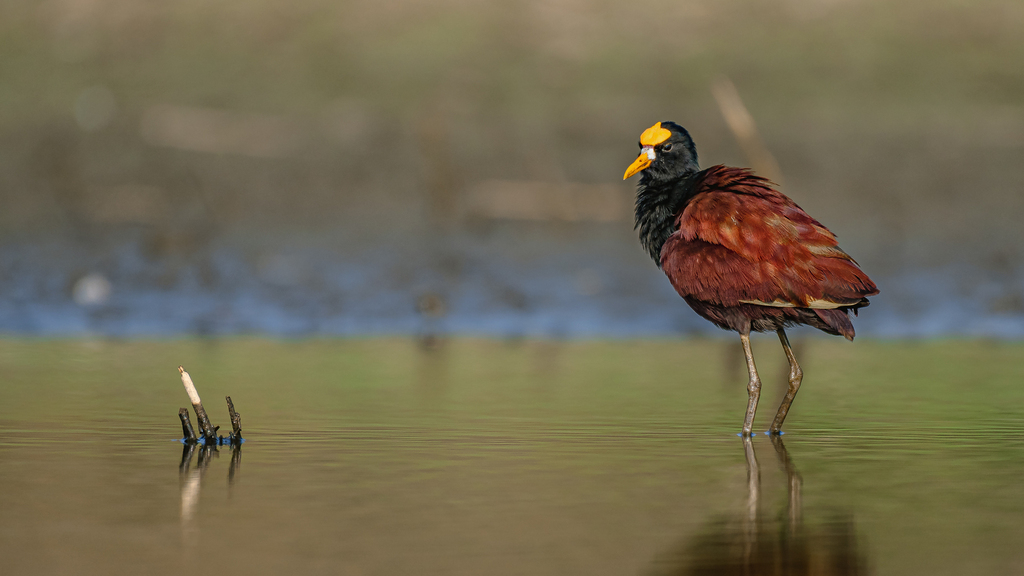
Northern Jacana
Jacana spinosa
About This Species
This long-toed wading bird walks confidently across floating vegetation on tropical and subtropical wetlands from Mexico through Central America, using its greatly elongated toes to spread its weight over lily pads and other aquatic plants. Look for its rich chestnut body, yellow frontal shield and habit of picking insects and small invertebrates directly off floating leaves, often flicking its wings open as it moves. Marshes, lagoons and slow rivers with abundant floating vegetation offer the best viewing, particularly in the early morning.
Ethical Viewing Guidelines
- A viewing distance of 20-30 metres from the water's edge or a boat is generally enough to watch normal foraging without causing birds to retreat into denser marsh vegetation.
- Wetland bird protections vary across the countries within its range, so check local regulations on approaching nesting or feeding sites rather than assuming a single rule applies throughout.
- Avoid pushing a boat or wading close to floating vegetation mats, since this can damage the very structures the bird relies on and flush foraging or nesting adults.
LCAvesCharadriiformesJacanidae
Seasonal Activity
211,918 sightings · 2000–2026
Citizen science records via GBIF
All monthsThis month
Classification
- Kingdom
- Animalia
- Phylum
- Chordata
- Class
- Aves
- Order
- Charadriiformes
- Family
- Jacanidae
Photo
(c) Daniel Pineda Vera, some rights reserved (CC BY), uploaded by Daniel Pineda Vera
CC-BY-4.0
Occurrence data from GBIF.