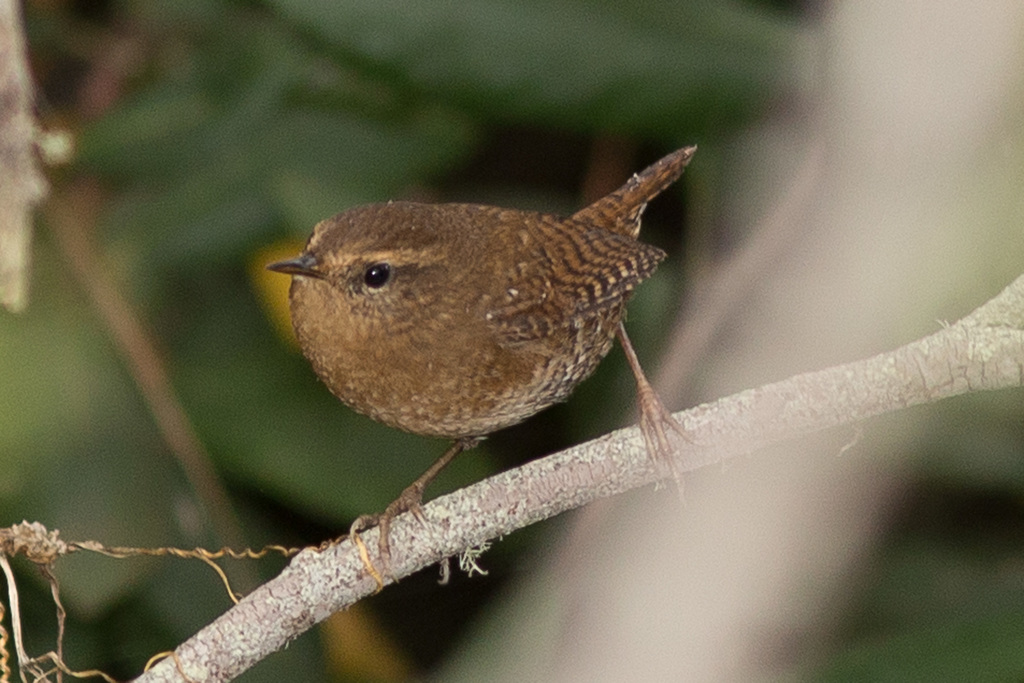
Pacific Wren
Troglodytes pacificus
Also known as: Western Winter Wren
About This Species
Skulks low in the dense understorey of wet coniferous forests along the Pacific coast, more often heard than seen as it forages among mossy logs, root tangles and stream banks for insects and spiders. Its song is an extraordinarily long, rapid, cascading series of trills, delivered year-round but most persistent in spring. Old-growth and mature second-growth forest with a thick understorey and abundant deadwood offer the best chance of an encounter.
Ethical Viewing Guidelines
- A distance of 10-15 metres is usually enough for good views without flushing this small, easily startled bird from cover.
- It is protected under the Migratory Bird Treaty Act in the US and equivalent federal wildlife law in Canada, so nest disturbance and deliberate flushing should be avoided, particularly during the spring and summer breeding season.
- Staying on trails and avoiding pishing or playback near an active nest reduces stress on breeding pairs.
LCAvesPasseriformesTroglodytidae
Seasonal Activity
819,282 sightings · 2000–2026
Citizen science records via GBIF
All monthsThis month
Classification
- Kingdom
- Animalia
- Phylum
- Chordata
- Class
- Aves
- Order
- Passeriformes
- Family
- Troglodytidae
Photo
(c) Donna Pomeroy, some rights reserved (CC BY-NC), uploaded by Donna Pomeroy
CC-BY-NC-4.0
Occurrence data from GBIF.