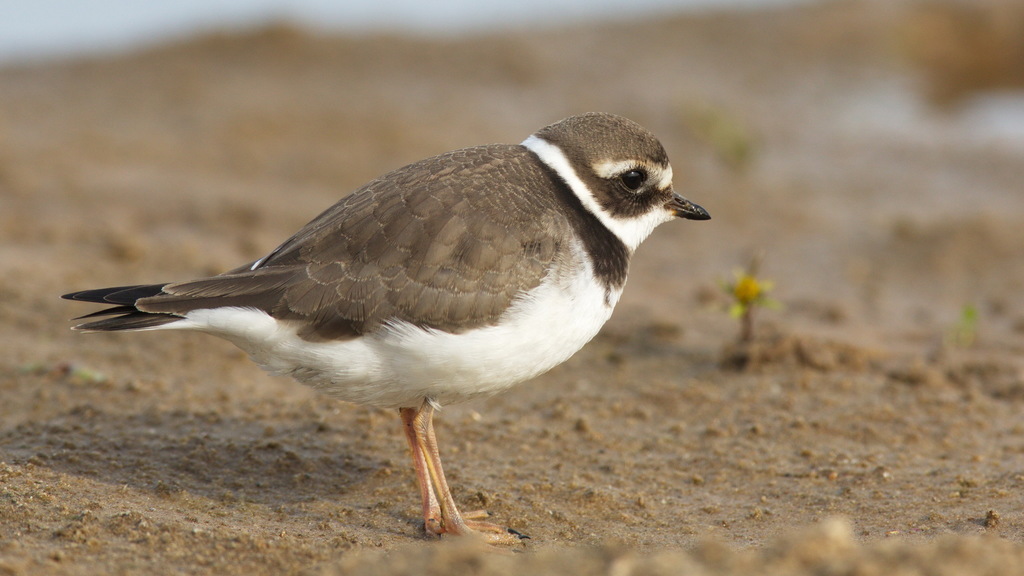
Common Ringed Plover
Charadrius hiaticula
Also known as: Ringed Plover, Great Ringed Plover
Habitat
Ground
Diet
Invertebrate
Active Time
Diurnal
Size
64 g
About This Species
Found on shingle and sandy beaches and Arctic tundra during the breeding season, and on tidal mudflats and shorelines across Europe, Africa, and Asia on migration and in winter, this small plover forages with the same stop-and-peck style typical of the group. Look for a bold black breast band and orange legs, and listen for a soft, fluted whistle. Spring and summer bring birds onto open beaches to nest, while passage periods concentrate them on estuaries and mudflats.
Ethical Viewing Guidelines
- Beach-nesting birds are especially vulnerable, since nests are simple scrapes on open ground that are easily trampled or abandoned if adults are repeatedly flushed, so keep to established paths and give nesting areas a wide berth in spring and summer.
- It is protected under national laws implementing the EU Birds Directive across much of its European range and under the Wildlife and Countryside Act 1981 in the UK, with similar protections elsewhere depending on the country.
- On migration and in winter, ordinary care around roosting flocks on mudflats is sufficient.
Seasonal Activity
1,604,446 sightings · 2000–2026
Citizen science records via GBIF
Classification
- Kingdom
- Animalia
- Phylum
- Chordata
- Class
- Aves
- Order
- Charadriiformes
- Family
- Charadriidae
Traits
- Diet
- Invertebrate
- Foraging
- Ground
- Activity
- Diurnal
- Body mass
- 64 g
Photo
(c) Вячеслав Юсупов, some rights reserved (CC BY), uploaded by Вячеслав Юсупов
CC-BY-4.0
Occurrence data from GBIF.