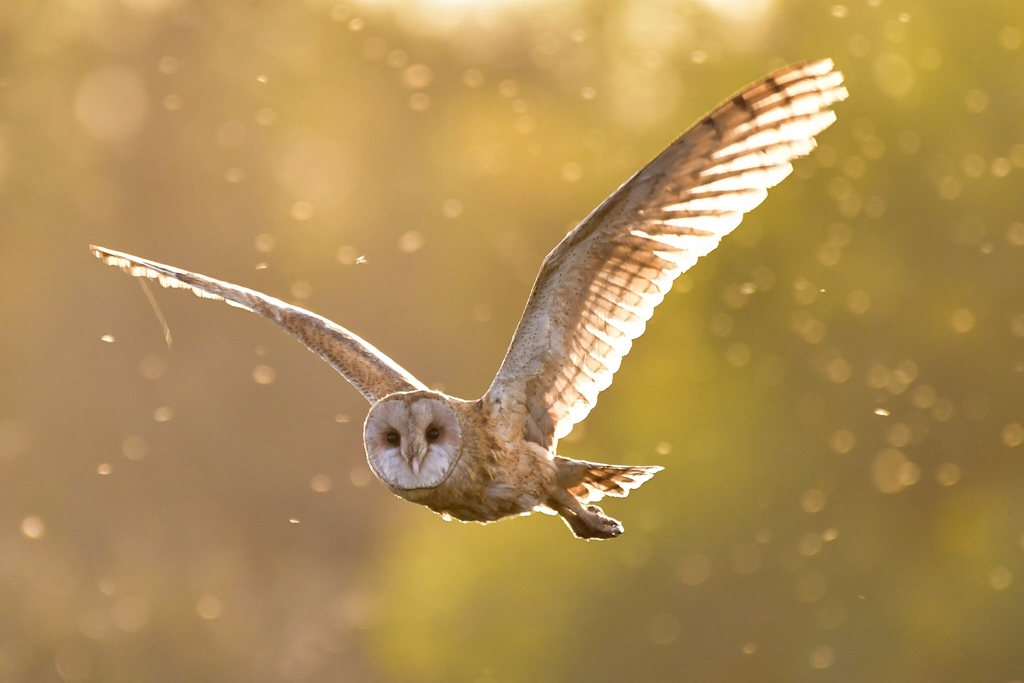
American Barn Owl
Tyto furcata
About This Species
Hunts low over open fields, marshes and grassland at dusk and through the night, flying with a slow, buoyant wingbeat while scanning for rodents by sound. A pale, ghostly shape crossing a field at twilight, sometimes accompanied by a harsh screech, is the most likely way to encounter it, and barns, silos or other quiet structures often hold daytime roosts. Dusk watches over open farmland in the warmer months tend to be most productive.
Ethical Viewing Guidelines
- Keep well back from any roost or nest site and avoid shining lights directly at a hunting bird, since disturbance at a roost can cause it to abandon the site altogether.
- Protections for owls and their nest sites apply across most of its range in the Americas, and it is illegal in many areas to disturb, handle or remove a nesting bird.
- Watching quietly from outside a barn or structure, without entering, is the safest and least disruptive approach.
NEAvesStrigiformesTytonidae
Seasonal Activity
272,699 sightings · 2000–2026
Citizen science records via GBIF
All monthsThis month
Classification
- Kingdom
- Animalia
- Phylum
- Chordata
- Class
- Aves
- Order
- Strigiformes
- Family
- Tytonidae
Photo
(c) Andria E. Hernandez, some rights reserved (CC BY-NC), uploaded by Andria E. Hernandez
CC-BY-NC-4.0
Occurrence data from GBIF.