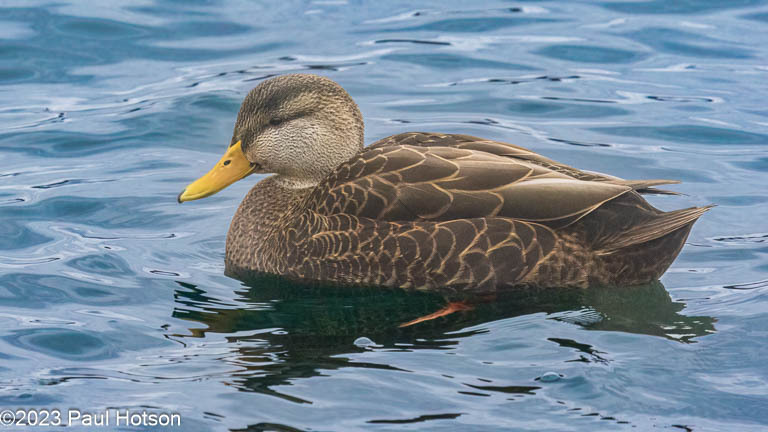
American Black Duck
Anas rubripes
Also known as: Black Duck, North American Black Duck
Habitat
Aquatic
Diet
PlantSeed
Active Time
Diurnal
Size
1.2 kg
About This Species
Look for these dabbling ducks on quiet coastal marshes, wooded swamps and slow rivers in eastern North America, where their dark, uniformly dusky plumage and pale wing linings help separate them from similar-looking Mallards. They are often wary and quick to flush, favouring more secluded, vegetated water than open lakes. Autumn through winter concentrates birds on coastal wetlands and estuaries, making that the most reliable season and habitat to find them.
Ethical Viewing Guidelines
- Stay back at least 20 to 30 metres and use a hide, path or vehicle as cover where possible, since this species is notably wary and easily flushed from resting or feeding areas.
- Nests, eggs and wintering waterfowl are protected under the Migratory Bird Treaty Act in the United States and analogous laws in Canada, making deliberate disturbance or nest destruction illegal.
- Moving slowly, avoiding direct approach and keeping dogs under close control near wetlands all help prevent unnecessary flushing, particularly during cold weather when the energy cost of flight is higher.
Seasonal Activity
2,561,428 sightings · 2000–2026
Citizen science records via GBIF
Classification
- Kingdom
- Animalia
- Phylum
- Chordata
- Class
- Aves
- Order
- Anseriformes
- Family
- Anatidae
Traits
- Diet
- PlantSeed
- Foraging
- Aquatic
- Activity
- Diurnal
- Body mass
- 1.2 kg
Photo
(c) Paul Hotson, some rights reserved (CC BY-NC), uploaded by Paul Hotson
CC-BY-NC-4.0
Occurrence data from GBIF.