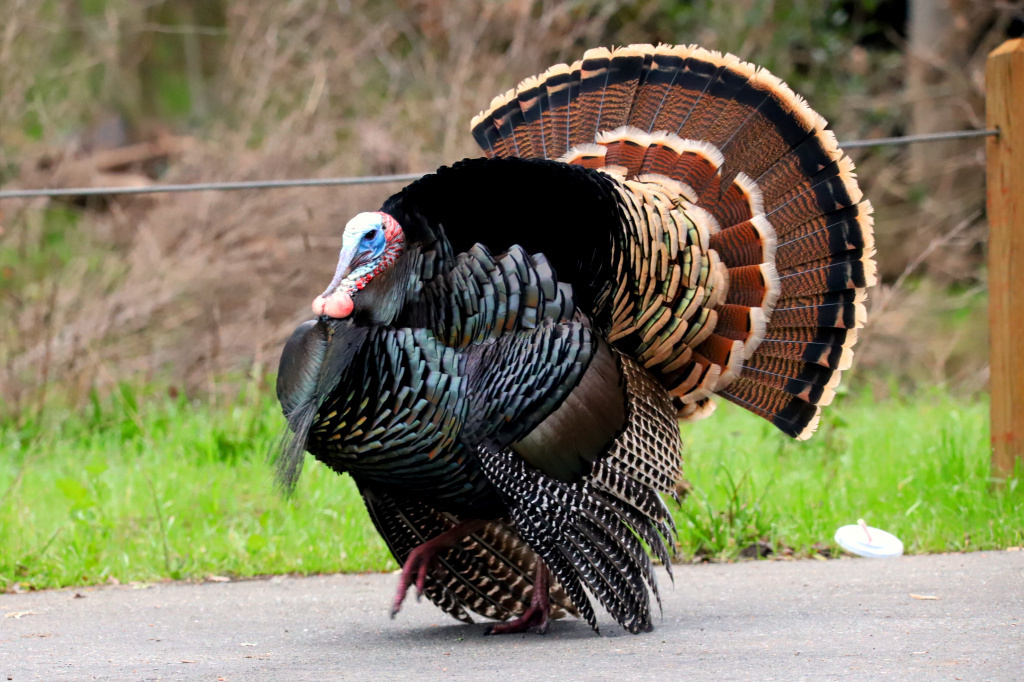
Wild Turkey
Meleagris gallopavo
Also known as: Turkey, Common Turkey, Domestic Turkey
Habitat
Ground
Diet
PlantSeed
Active Time
Diurnal
Size
5.8 kg
About This Species
Wild Turkeys favour open woodland edges bordering fields and clearings, where flocks forage on the ground for seeds, nuts, and insects, particularly acorns in fall. Males display prominently in spring, fanning their tail feathers and gobbling to attract mates, making that the most reliable season to see courtship behaviour. Early morning and late afternoon are typically the most active foraging periods, especially near forest-field boundaries.
Ethical Viewing Guidelines
- Maintain a comfortable distance, especially from displaying males or hens with young poults, since flocks that feel cornered may become defensive or bolt through cover.
- In much of their range they are managed game birds, so hunting regulations and seasons apply and non-hunting encounters should stay strictly observational.
- Never approach or feed them at close range, as habituated birds can become aggressive toward people.
LCAvesGalliformesPhasianidae
Seasonal Activity
2,752,739 sightings · 2000–2026
Citizen science records via GBIF
All monthsThis month
Classification
- Kingdom
- Animalia
- Phylum
- Chordata
- Class
- Aves
- Order
- Galliformes
- Family
- Phasianidae
Traits
- Diet
- PlantSeed
- Foraging
- Ground
- Activity
- Diurnal
- Body mass
- 5.8 kg
Photo
(c) Matt K, some rights reserved (CC BY-NC), uploaded by Matt K
CC-BY-NC-4.0
Occurrence data from GBIF.