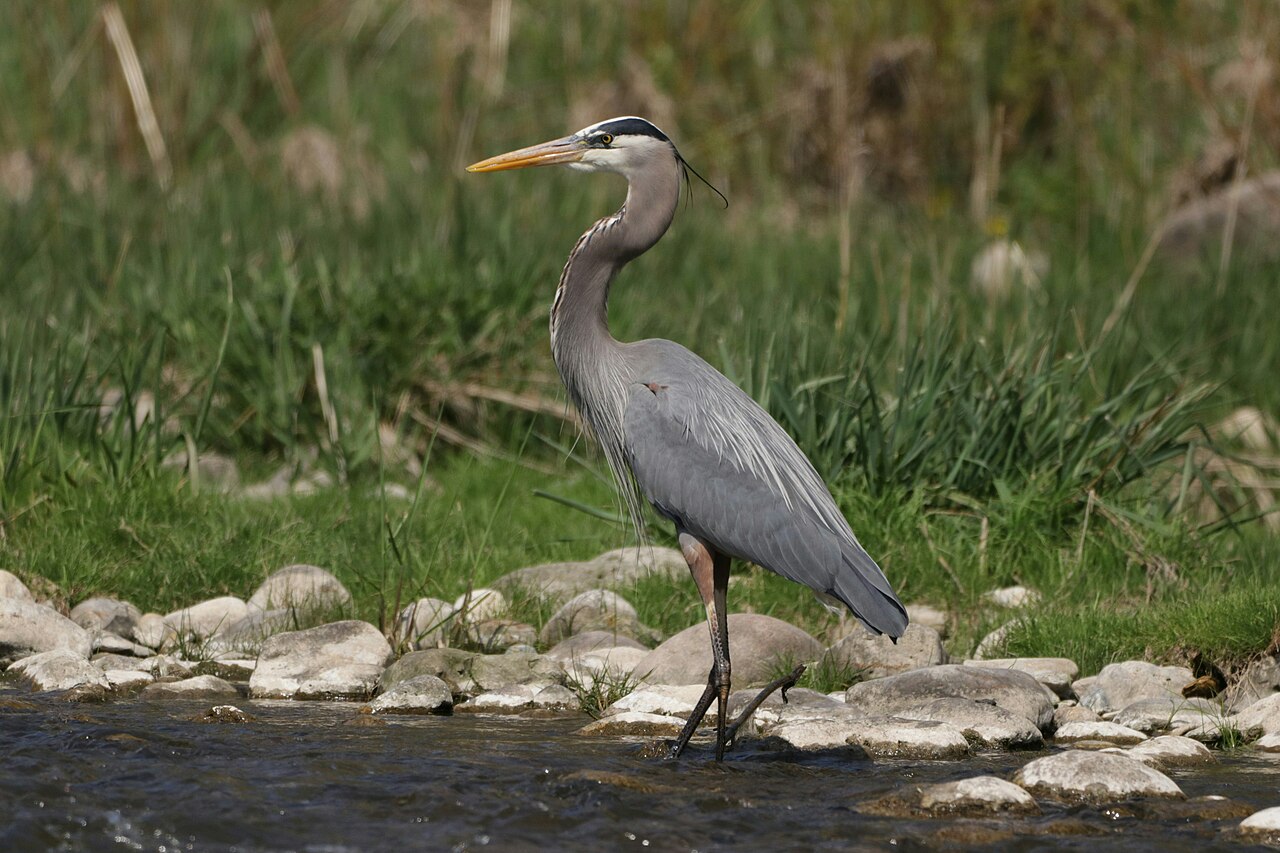
Great Blue Heron
Ardea herodias
Also known as: Amerikaanse Blauwe Reiger
Habitat
Aquatic
Diet
VertFishScav
Active Time
Diurnal
Size
2.5 kg
About This Species
Look for this large, statuesque heron standing motionless in shallow water at the edge of lakes, marshes, and tidal flats, waiting to spear fish with a sudden strike of its bill. Dawn and dusk are typically the most active feeding times, and it is also visible in flight with slow, deep wingbeats and its neck folded into an S-shape. Breeding colonies in tall trees are active from early spring, offering a chance to see multiple nests at once from a distance.
Ethical Viewing Guidelines
- Keep well back, at least several tens of metres, when a heron is hunting, since flushing it interrupts a feeding effort that can take many minutes to set up again.
- Nesting colonies are especially sensitive: approaching or lingering near a rookery can cause adults to abandon nests, and many jurisdictions protect herons and their nests under general migratory bird or wildlife protection law.
- Observe with binoculars from a distance rather than approaching the shoreline or nest trees directly.
LCAvesPelecaniformesArdeidae
Seasonal Activity
13,631,758 sightings · 2000–2026
Citizen science records via GBIF
All monthsThis month
Classification
- Kingdom
- Animalia
- Phylum
- Chordata
- Class
- Aves
- Order
- Pelecaniformes
- Family
- Ardeidae
Traits
- Diet
- VertFishScav
- Foraging
- Aquatic
- Activity
- Diurnal
- Body mass
- 2.5 kg
Photo
Wikimedia Commons / Wikimedia Commons
CC-BY-SA-4.0
Occurrence data from GBIF.