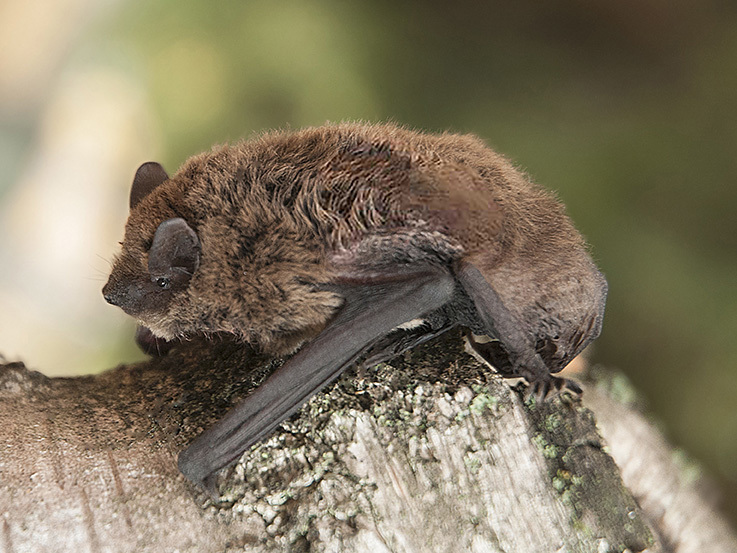
Great Pipistrelle
Pipistrellus kuhlii
Also known as: White Stripe Bat
Habitat
Aerial
Diet
Invertebrate
Active Time
Nocturnal
Size
6 g
About This Species
This small bat roosts in building crevices, roof spaces, and expansion joints across the Mediterranean and an expanding range through Europe, emerging at dusk to hunt insects over water, streetlights, and urban parks. Its fast, erratic flight and early emergence, often before full dark, make it one of the easier bats to pick out on a bat detector or by eye at twilight. Warm evenings near water or artificial lighting in summer are the most reliable conditions.
Ethical Viewing Guidelines
- Bats and their roosts are legally protected across most of Europe under national law and the Bern Convention, and disturbing or handling one without a license is generally an offense.
- Never touch a bat, including one found grounded, both for its protection and because bats can carry pathogens transmissible through bites or scratches; observe foraging animals from a distance and leave roost sites in buildings undisturbed.
NEMammaliaChiropteraVespertilionidae
Seasonal Activity
421,467 sightings · 2000–2025
Citizen science records via GBIF
All monthsThis month
Classification
- Kingdom
- Animalia
- Phylum
- Chordata
- Class
- Mammalia
- Order
- Chiroptera
- Family
- Vespertilionidae
Traits
- Diet
- Invertebrate
- Foraging
- Aerial
- Activity
- Nocturnal
- Body mass
- 6 g
Photo
(c) Roberto Ghiglia, some rights reserved (CC BY-NC), uploaded by Roberto Ghiglia
CC-BY-NC-4.0
Occurrence data from GBIF.