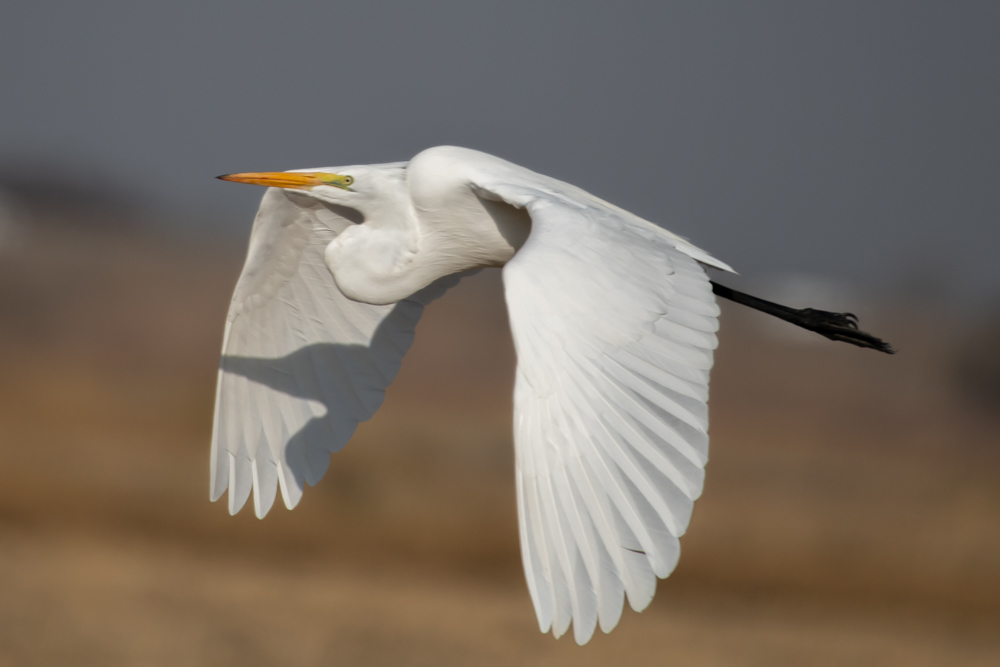
Great Egret
Ardea alba
Also known as: Great White Egret, American Egret, Great White Heron, Large Egret, Western Great Egret
About This Species
This tall, all-white heron stalks slowly through shallow wetlands, lagoons, and flooded fields, freezing before a rapid strike at fish or amphibians. It is most easily seen at dawn or dusk feeding at the water's edge, and during breeding season adults develop long, delicate back plumes and gather in mixed wading-bird colonies in trees over water. Its wide range means it can turn up in almost any open wetland habitat, often alongside herons and egrets of other species.
Ethical Viewing Guidelines
- Keep a generous distance, ideally observing with binoculars or a scope rather than approaching the shoreline, since egrets flush easily and repeated disturbance at a feeding or roosting site can force them elsewhere.
- The species and its plumes were historically hunted to near-collapse, and it remains protected under general wildlife and migratory bird law across most of its range, though specific protections vary by country.
- Nesting colonies are particularly sensitive and best watched from well outside the colony's edge.
LCAvesPelecaniformesArdeidae
Seasonal Activity
12,488,602 sightings · 2000–2026
Citizen science records via GBIF
All monthsThis month
Classification
- Kingdom
- Animalia
- Phylum
- Chordata
- Class
- Aves
- Order
- Pelecaniformes
- Family
- Ardeidae
Photo
(c) daverowe, some rights reserved (CC BY-NC)
CC-BY-NC-4.0
Occurrence data from GBIF.